
- Full-stack data plus ML drug discovery
- Proprietary human-cell data generation depth
- Major pharmaceutical collaboration track record

Insitro
ML drug discovery with proprietary biology data
SF8.2
SF Score editorial score across features, ease, and value, based on public reviews and product research. Learn more →
Support protein engineering programs
Support protein engineering programs
Best for
Pharma partners on data-rich discovery programs
Pricing
Custom
SoftFinders Score
8.2 / 10
Overview
What is Insitro?
Insitro is a machine-learning drug discovery company for pharmaceutical partners, combining proprietary biological data generation with predictive modeling to support selected target discovery and R&D programs.
- Operating model: Engagement is partnership-led rather than self-serve, making it most relevant to organizations prepared for complex collaborative, long-term discovery work.
- Scientific approach: Its platform combines integrated computational biology, proprietary human-cell data, machine learning, and wet-lab integration across drug-target workflows.
- Evaluation priorities: Buyers should assess data-access requirements, expected timelines to validated leads, and program-specific cost structures across proposed collaborations.
- Commercial considerations: Pricing is sales-led and scoped per buyer; confirm program fit, workflow requirements, implementation support, and collaboration scope before committing.
For data-rich discovery programs, the key question is whether Insitro's partnership model and technical depth match the buyer's overall scientific and operational needs.
KEY FEATURES
What you get out of the box
Protein Modeling
Predicts and designs protein structures
Knowledge Graph
Connects biological and chemical knowledge sources
Virtual Screening
Screens compound libraries against targets
Literature Intelligence
Mines biomedical literature for relevant evidence
Multi Omics
Integrates genomic and other omics data sources
Lab Integration
Connects discovery insights with wet-lab workflows
USE CASES
Where teams put it to work
Support protein engineering programs
Mine literature for research signals
Run virtual screens against targets
Collaborate with pharmaceutical partners
Bridge AI design and wet-lab cycles
Identify drug targets from biology data
Editorial Take
What we like, and what to verify
- Engagement centers on pharmaceutical partnerships
- Not a buyer-facing software subscription
- Drug success still depends on clinical work
Screenshots
A look inside
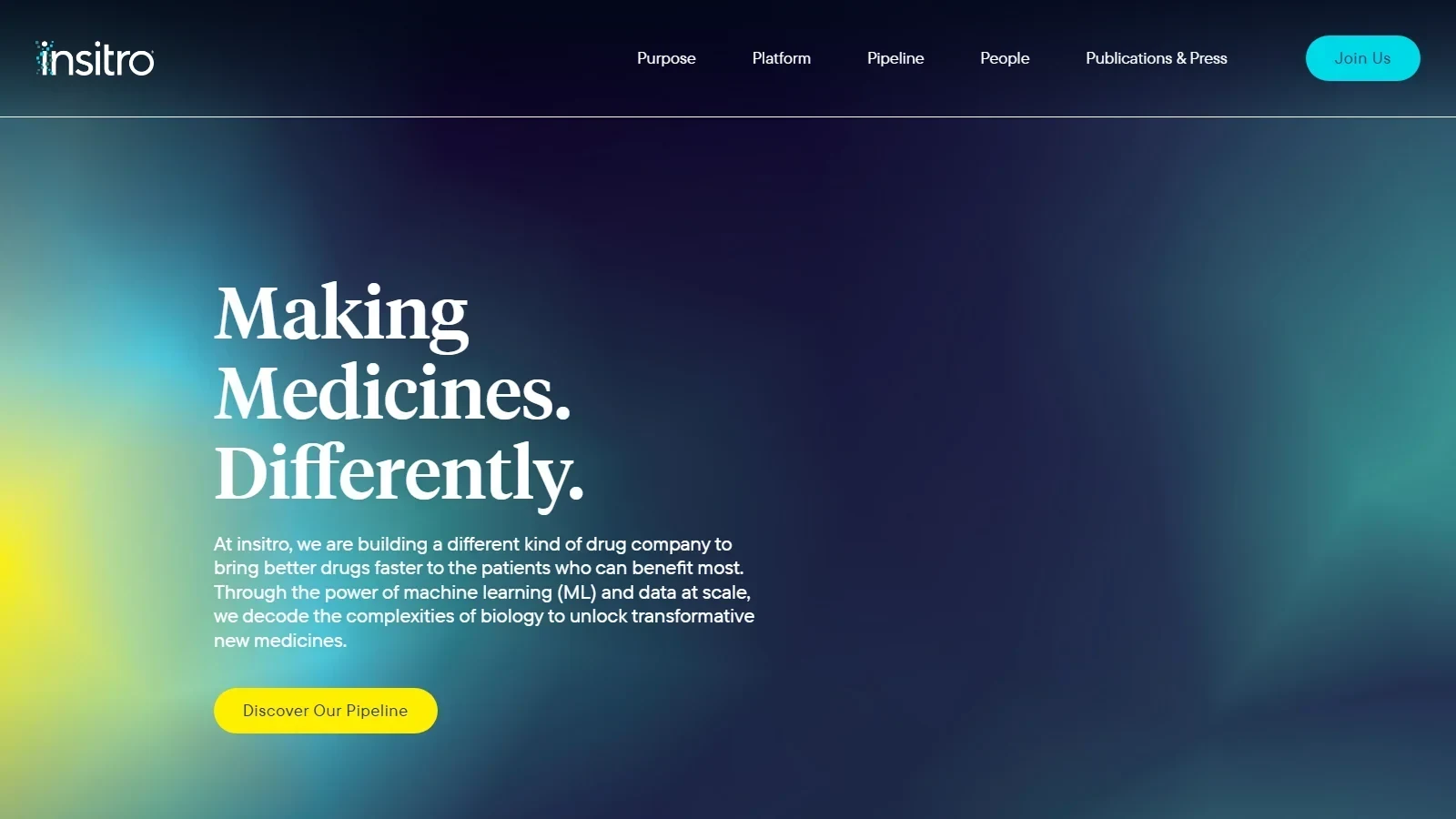 Insitro homepage screenshot
Alternatives
Tools to consider next

Isomorphic Labs SF 8.4
Why consider it
DeepMind spinout for AI drug design

Recursion SF 8.1
Why consider it
AI biotech with cellular imaging and automation

BenevolentAI SF 7.8
Why consider it
AI drug discovery using biomedical knowledge graphs

Abridge SF 8.8
Why consider it
Generative AI scribe for health systems

Nuance DAX Copilot SF 8.7
Why consider it
Microsoft and Nuance enterprise ambient scribe
FAQ