
- Generative protein design across modalities
- Concentrates on drug discovery depth over broad coverage
- Scales to organization-wide healthcare rollouts

Generate Biomedicines
Generative protein design across modalities
SF7.7
SF Score editorial score across features, ease, and value, based on public reviews and product research. Learn more →
Collaborate with pharma partnersPharma partners and biologics programs
Collaborate with pharma partnersPharma partners and biologics programs
Best for
Pharma partners and biologics programs
Pricing
Custom
SoftFinders Score
7.7 / 10
Overview
What is Generate Biomedicines?
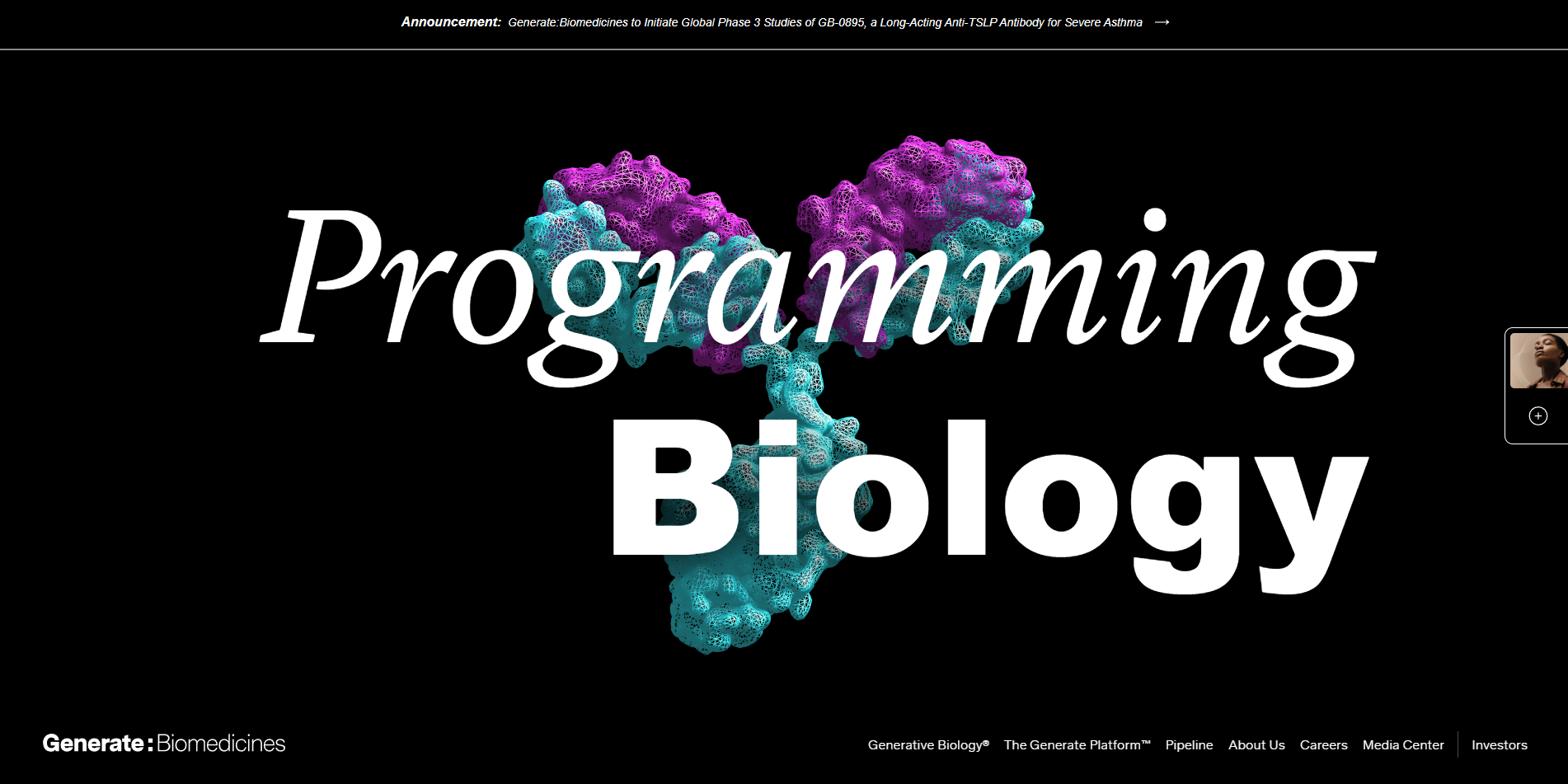
Generate Biomedicines is a generative biology platform for pharma and biologics programs, using machine learning to design proteins and therapeutics.
- Research focus: It supports protein and therapeutic design rather than guaranteed clinical outcomes, with candidates requiring validation and trials.
- Best-fit environment: Pharma and biologics programs fit best when protein design aligns with R&D and wet-lab workflows.
- Engagement model: Access typically runs through pharma partnerships rather than self-service subscriptions, making collaboration structure and timelines key considerations.
- Commercial model: Pricing is sales-led and scoped per buyer rather than publicly posted, with economics shaped by partnership scope.
Generate Biomedicines is best assessed as a partnership-led discovery platform whose fit depends on scientific objectives and wet-lab integration.
KEY FEATURES
What you get out of the box
Knowledge Graph
Connects biological and chemical knowledge sources
Virtual Screening
Screens compound libraries against targets
Literature Intelligence
Mines biomedical literature for relevant evidence
Multi Omics
Integrates genomic and other omics data sources
Lab Integration
Connects discovery insights with wet-lab workflows
Partner Workflows
Workflows for pharma partner collaborations
USE CASES
Where teams put it to work
Collaborate with pharma partners
Bridge AI design and wet lab cycles
Identify drug targets from biology data
Accelerate molecule design cycles
Support protein engineering programs
Mine literature for research signals
Editorial Take
What we like, and what to verify
- Engagement runs through partnership deals
- Drug success still depends on downstream trials
- Pricing is sales-led and needs scoping upfront
Screenshots
A look inside
Alternatives
Tools to consider next

Iktos SF 7.4
Why consider it
Generative chemistry and synthesis planning AI

Cradle SF 7.5
Why consider it
AI protein design for wet labs

Chai Discovery SF 7.3
Why consider it
Molecular structure prediction for discovery research

NOETIK SF 7.1
Why consider it
Spatial biology models for cancer targets

Causaly SF 7.6
Why consider it
Biomedical evidence and reasoning for R&D

Schrödinger SF 8
Why consider it
Physics-based and ML molecular simulation
FAQ