
- Powerful time series analytics for process engineers
- Connects to many industrial historians and sources
- Encourages collaboration across reliability and process teams

Seeq Analytics
Self service analytics for process data
SF8.7
SF Score editorial score across features, ease, and value, based on public reviews and product research. Learn more →
seeqprocess analyticstime series analytics
seeqprocess analytics
Best for
Process engineers using historian data
Pricing
Custom
SoftFinders Score
8.7 / 10
Overview
What is Seeq Analytics?
Seeq is an industrial analytics, AI, and enterprise monitoring platform built for engineers, operations teams, and data scientists working with time-series process data. Its browser-based applications include Workbench for analysis, Organizer for reporting, Data Lab for Python workflows, and Vantage for monitoring large numbers of assets and operational events.
- Industrial analytics: Seeq Workbench provides no-code and low-code tools for cleansing data, defining operating periods, performing calculations, modeling behavior, making predictions, and investigating equipment or process performance. Its Formula language adds more advanced transformations and calculations when point-and-click tools are not sufficient.
- Reporting and enterprise monitoring: Organizer turns Workbench analyses into interactive dashboards and reports that can update with current data manually or on a schedule. Vantage provides a separate enterprise-monitoring workflow that aggregates conditions and events across large numbers of sensors and assets, helping teams triage and investigate predictive-maintenance issues, downtime, alarms, and other operational exceptions. Vantage requires additional licensing.
- Industrial data connectivity: Seeq connects directly to historians, SQL databases, data lakes, and other industrial data systems through supported connectors and Remote Agents. Connected source systems remain authoritative: Seeq retrieves and caches their data for calculation and visualization rather than replacing the historian or creating a new system of record. Buyers should therefore evaluate connector availability, network access, source-system performance, latency, and data quality.
- AI and Python workflows: Seeq AI Assistant includes agents for tasks such as writing formulas, performing analyses, creating Seeq content, assisting with reports, and automating repeatable multi-step workflows. Data Lab provides a JupyterLab environment with Python, the Seeq/Python library, machine-learning libraries, scheduled jobs, and custom analytics. AI availability is deployment- and license-dependent: the current AI Assistant is offered to eligible SaaS customers, while capabilities such as Agent Q and custom Agent Builder workflows require Seeq Intelligence licensing.
Seeq is most relevant to industrial organizations that already hold substantial process and asset data in historians or other operational systems and want engineers to analyze that data without repeatedly exporting it into spreadsheets or separate analytics silos. Its value depends on data connectivity, engineering adoption, monitoring scale, licensing requirements, and whether faster analysis and exception-based monitoring can materially improve operational decisions across assets and plants.
KEY FEATURES
What you get out of the box
Time Series Search
Finds patterns across historian data quickly
Calculation Engine
Builds engineered signals on top of data
Operational Dashboards
Operational views and asset performance reports
Historian Connectors
Connects to PI and other industrial historians
Engineer Collaboration
Shared analyses across reliability and process teams
Cloud Deployment
Runs in major cloud providers globally
USE CASES
Where teams put it to work
Investigate process plant events and anomalies
Build asset performance dashboards for engineers
Support reliability engineering analysis and decisions
Replace spreadsheet analytics with managed tools
Standardize process analytics across plant teams
Connect to existing historians and sources
Editorial Take
What we like, and what to verify
- Needs strong historian data and engineering capacity
- Less suited for plants without process data history
- Pricing scales with users and connected sources
Screenshots
A look inside
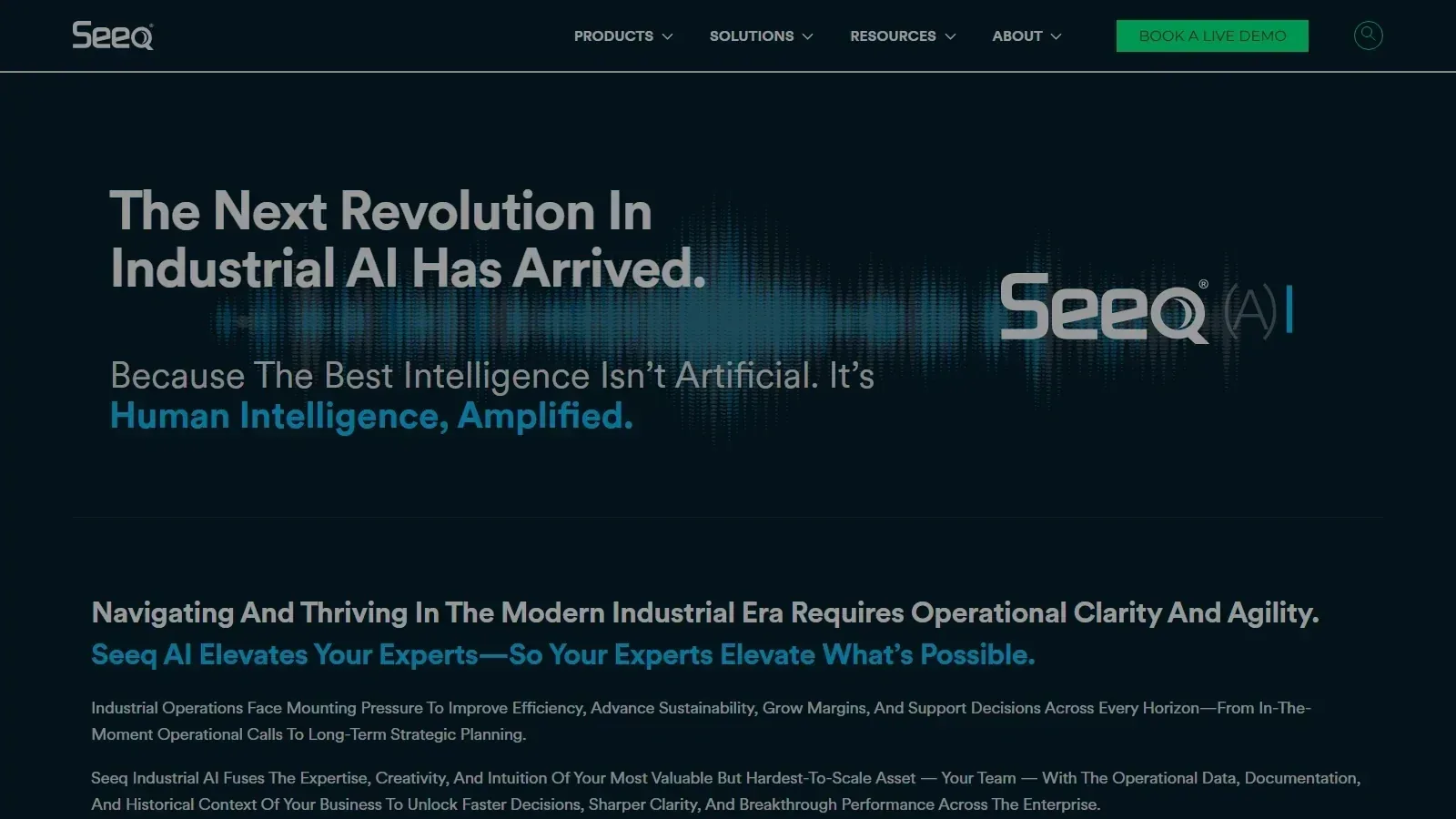 Seeq Analytics homepage screenshot
Alternatives
Tools to consider next

TrendMiner SF 8.5
Why consider it
Time series search for process plants

Arundo Analytics SF 7.9
Why consider it
Industrial AI for asset analytics

Emerson Plantweb SF 8.4
Why consider it
Plantweb digital ecosystem from Emerson

OpreX Asset Health SF 8
Why consider it
Yokogawa asset health and integrity

Honeywell Forge SF 8.2
Why consider it
Honeywell connected operations and analytics platform
FAQ