
- Runtime debugging reduces blind log changes
- AI debugger supports faster incident hypotheses
- IDE integration keeps developers close signals

Lightrun
Production debugging with AI SRE assistance
SF8.4
SF Score editorial score across features, ease, and value, based on public reviews and product research. Learn more →
Production Bug Diagnosisproduction debuggingAI SRE
Production Bug Diagnosisproduction debugging
Best for
Production teams debugging live services
Pricing
Free tier available
Free plan
Available
SoftFinders Score
8.4 / 10
Overview
What is Lightrun?
Lightrun is a production debugging and AI SRE platform for teams that need runtime context without redeploying code. It adds dynamic logs, snapshots, metrics, traces, and AI-guided investigation into live services so engineers can understand incidents from inside the running application. Its strength is helping developers diagnose production behavior while reducing blind log changes and risky instrumentation delays during live-service investigation and ownership reviews.
It fits teams operating complex services where reproducing bugs locally is slow or impossible. Buyers should assess language coverage, security controls, IDE adoption, and how autonomous debugging fits existing incident workflows. Lightrun is not a general observability replacement; compare it with Logz.io, Raygun, and Resolve.ai when the buying priority is live debugging rather than dashboards alone during production incident review and on-call coordination work.
KEY FEATURES
What you get out of the box
Dynamic Logs
Adds runtime evidence without redeploying code signals
Live Snapshots
Captures production state during active investigations evidence
AI Debugger
Suggests root causes and diagnostic actions evidence
Runtime Metrics
Collects service signals from running applications evidence
IDE Plugins
Brings debugging actions into developer environments evidence
Trace Evidence
Connects live telemetry with execution behavior signals
USE CASES
Where teams put it to work
Production Bug Diagnosis
Runtime Context Capture
Logging Cost Reduction
AI SRE Investigation
Developer Debug Workflows
Serverless Issue Review
Editorial Take
What we like, and what to verify
- Requires security review for production access
- Not a complete observability replacement alone
- Language and environment coverage need verification
Screenshots
A look inside
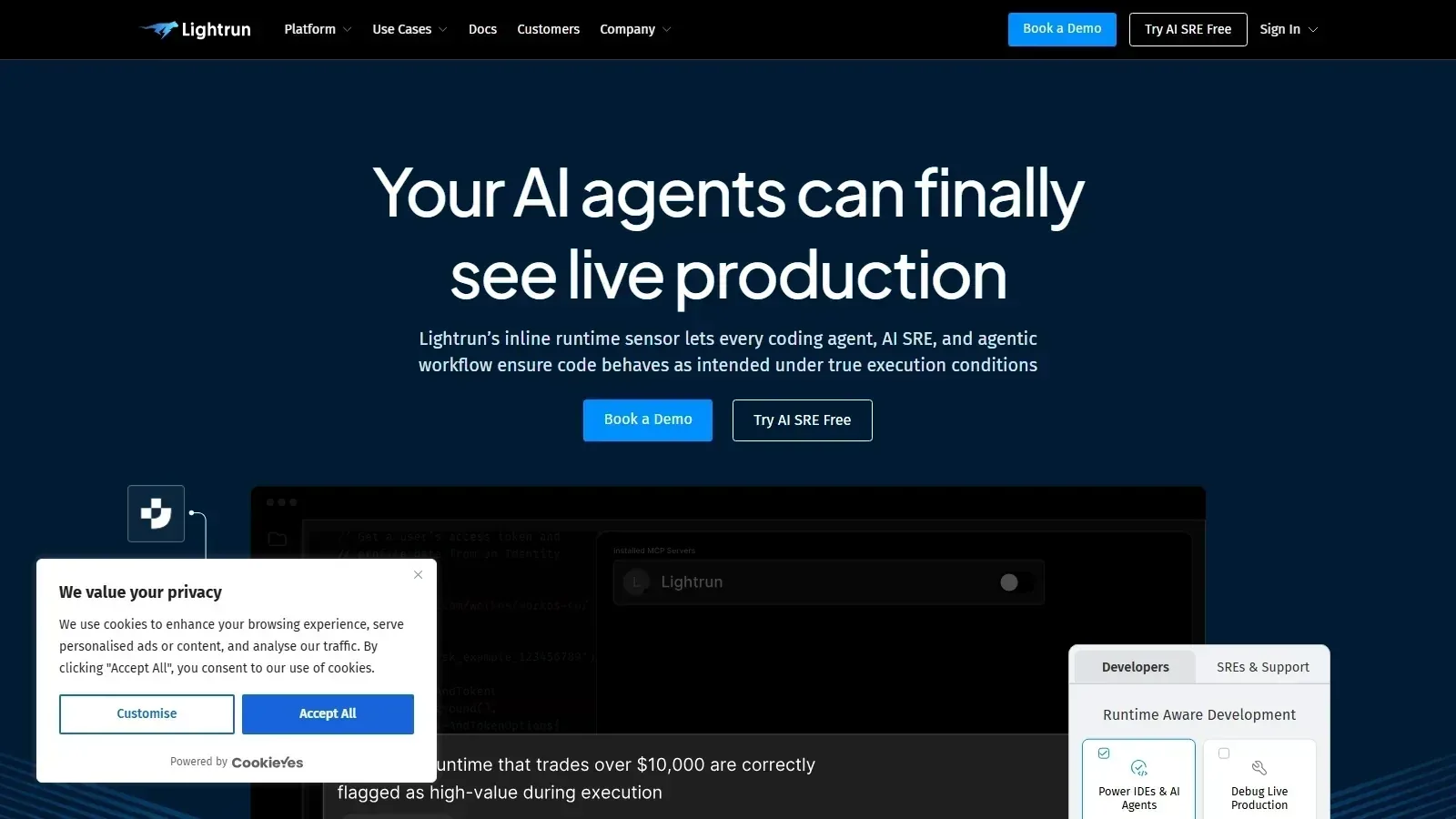 Lightrun homepage screenshot
Alternatives
Tools to consider next
Logz.io SF 8.3
Why consider it
AI observability for telemetry-heavy engineering teams

BugSnag SF 8.1
Why consider it
Error monitoring for application stability teams

Raygun SF 8
Why consider it
Crash monitoring with user impact insights
Middleware SF 8.2
Why consider it
Full-stack observability with AI operations assistance

Dynatrace SF 9.1
Why consider it
Enterprise observability with causal AI automation

Resolve.ai SF 8.1
Why consider it
AI agents for production incident response
FAQ