
- Freemium model supports developer adoption well
- Traffic capture creates realistic API tests
- Mocks reduce dependency setup during testing

Keploy
Traffic-based API tests for backend teams
SF8.3
SF Score editorial score across features, ease, and value, based on public reviews and product research. Learn more →
API Regression GenerationAPI testingopen source testing
API Regression GenerationAPI testing
Best for
Backend teams generating API tests
Pricing
Free tier available
Free plan
Available
SoftFinders Score
8.3 / 10
Overview
What is Keploy?
Keploy is an open-source API and integration testing platform for backend teams that want tests generated from real application traffic. It records API calls, creates deterministic test cases, builds mocks, and now offers cloud tiers with AI credits and usage limits. Its strength is developer workflow fit: regression coverage comes from observed service behavior rather than manual test drafting across changing environments and deployments.
It fits engineering teams with service APIs, database interactions, and limited time for writing regression tests manually. Buyers should evaluate language support, deployment model, traffic sanitization, and paid cloud usage before scaling. Keploy is less relevant for browser UI testing; compare it with Katalon, Reflect, and Mabl. Adoption works best when teams sanitize traffic and align generated tests with CI ownership and security reviews.
KEY FEATURES
What you get out of the box
Traffic Capture
Records API calls from real usage consistently
Test Generation
Creates regression tests from captured behavior centrally
Mock Creation
Builds mocks and stubs for dependency isolation
CI Integration
Runs generated API tests in pipelines practically
Backend Focus
Targets services rather than browser journeys clearly
Open Source
Keeps core testing workflow community accessible early
USE CASES
Where teams put it to work
API Regression Generation
Backend Mock Creation
CI Pipeline Validation
Service Contract Checks
Traffic Sanitization Review
Open Source Adoption
Editorial Take
What we like, and what to verify
- Browser UI testing is outside scope
- Traffic data requires careful sanitization policies
- Setup depends on backend architecture choices
Screenshots
A look inside
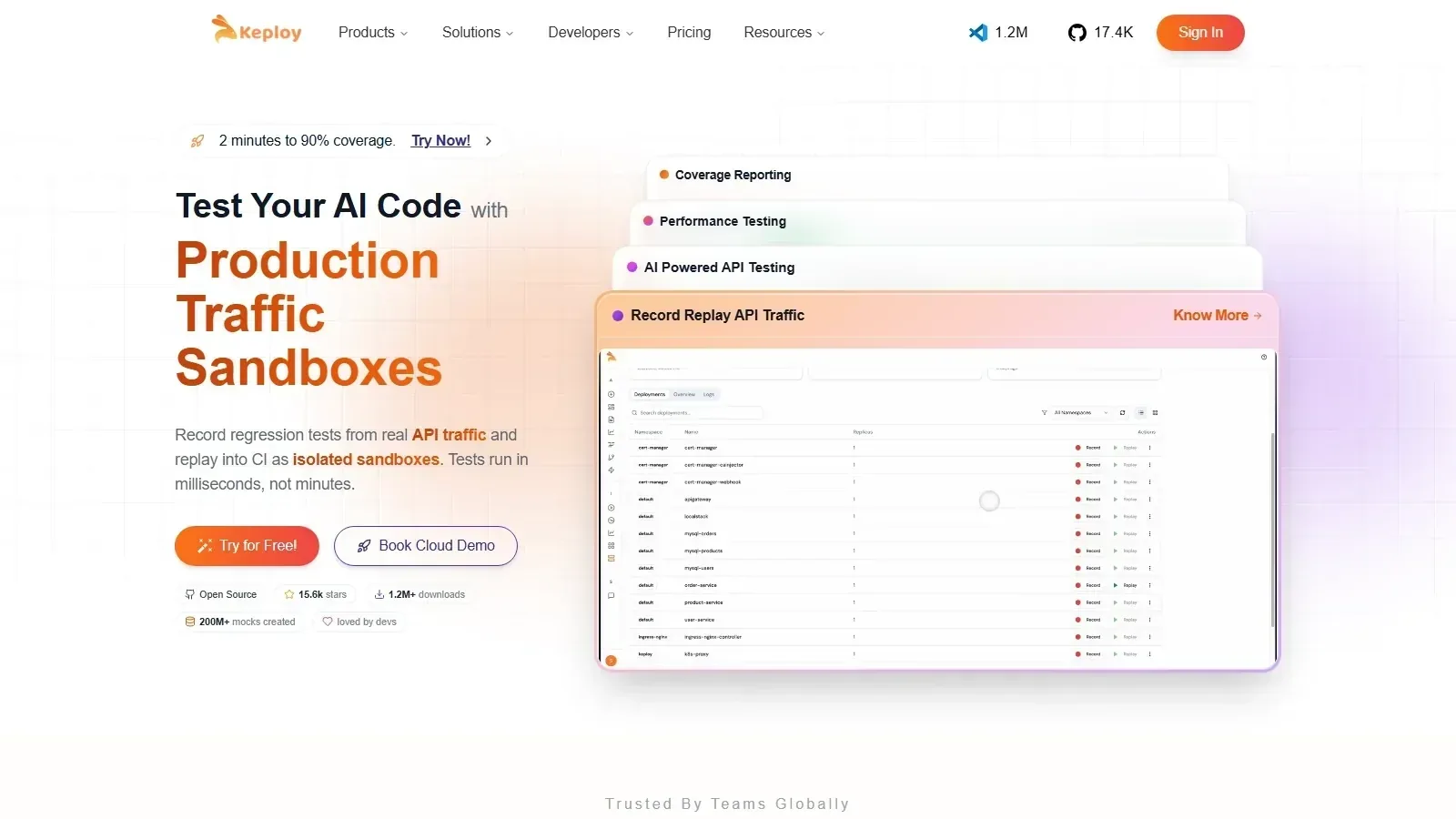 Keploy homepage screenshot
Alternatives
Tools to consider next

Katalon SF 8.7
Why consider it
Unified automation for cross-platform testing teams
Octomind SF 7
Why consider it
Winding-down E2E testing platform for reference

Mabl SF 8.8
Why consider it
Low-code testing for resilient web workflows

Functionize SF 8.4
Why consider it
Agentic testing for enterprise QA workflows

Reflect SF 8.2
Why consider it
No-code tests for browser workflow checks

Testim SF 8.5
Why consider it
AI-stabilized tests for web release teams
FAQ