
- Useful reference for AI testing concepts
- Playwright portability reduced vendor lock-in originally
- Shutdown notice improves buyer transparency substantially
Octomind
Winding-down E2E testing platform for reference
SF7
SF Score editorial score across features, ease, and value, based on public reviews and product research. Learn more →
Testing Tool ResearchAI testingE2E testing
Testing Tool ResearchAI testing
Best for
Teams replacing discontinued testing workflows
Pricing
Custom
SoftFinders Score
7 / 10
Overview
What is Octomind?
Octomind was an AI-powered end-to-end testing platform for web teams that wanted AI-created Playwright tests, CI execution, debugging traces, and self-healing maintenance. Its own farewell notice says the product is being turned off at the end of May 2026 and the company winds down by June. The listing should be treated as historical context, not a new buying recommendation for active software teams.
Teams evaluating Octomind should compare active alternatives before making any buying decision. The remaining product pages still explain useful testing concepts, but buyers should not plan rollout around unavailable software. Compare Mabl, Testim, Reflect, Keploy, and Applitools for current options. Existing users should prioritize export, migration planning, replacement coverage, ownership, regression continuity, and active vendor transition planning risks before the May 2026 shutdown deadline.
KEY FEATURES
What you get out of the box
Historical Context
Documents prior AI testing workflow ideas only
Playwright Tests
Generated portable browser tests in earlier product
CI Workflows
Connected generated tests with release pipelines historically
Self Healing
Repaired selectors before shutdown plans changed publicly
Debug Traces
Explained failures using logs and screenshots historically
Migration Signal
Highlights why teams need replacement planning now
USE CASES
Where teams put it to work
Testing Tool Research
Migration Risk Planning
AI Testing Benchmark
E2E Coverage Review
Vendor Risk Review
Alternative Shortlisting Work
Editorial Take
What we like, and what to verify
- Product shutdown prevents new adoption planning
- Existing users need replacement coverage urgently
- Pricing page no longer supports buying
Screenshots
A look inside
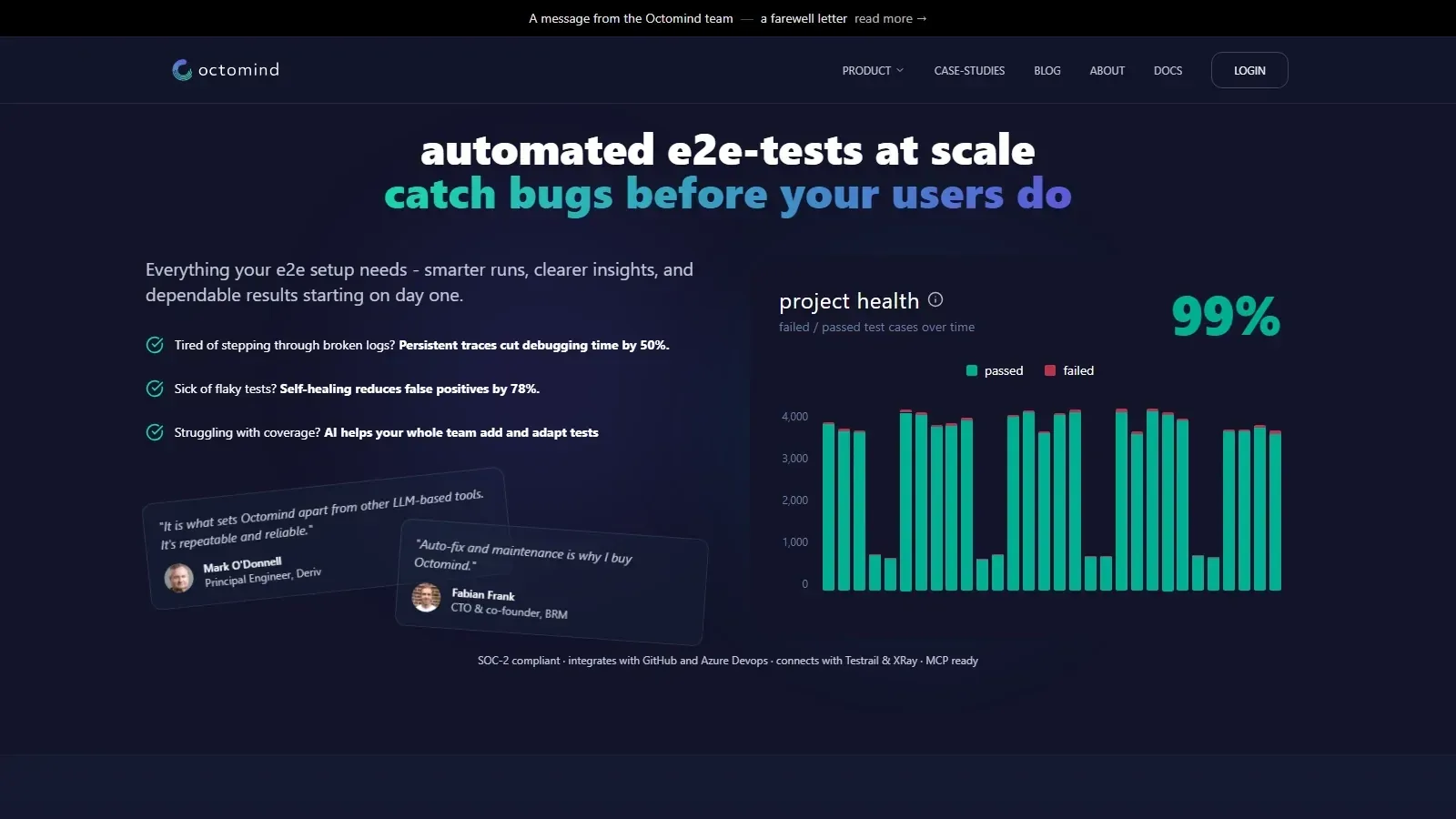 Octomind homepage screenshot
Alternatives
Tools to consider next

Mabl SF 8.8
Why consider it
Low-code testing for resilient web workflows

Reflect SF 8.2
Why consider it
No-code tests for browser workflow checks

Testim SF 8.5
Why consider it
AI-stabilized tests for web release teams

KaneAI SF 8.4
Why consider it
Natural-language QA agent for test creation

Applitools SF 8.9
Why consider it
Visual AI testing for UI regressions

Keploy SF 8.3
Why consider it
Traffic-based API tests for backend teams
FAQ