
- Managed model reduces internal QA burden
- Parallel runs support fast release cycles
- Coverage ownership is clearer than tooling

QA Wolf
Managed automation for broad E2E coverage
SF8.3
SF Score editorial score across features, ease, and value, based on public reviews and product research. Learn more →
Managed E2E Coveragetest automationmanaged QA
Managed E2E Coveragetest automation
Best for
Teams outsourcing E2E test maintenance
Pricing
Custom
SoftFinders Score
8.3 / 10
Overview
What is QA Wolf?
QA Wolf combines test automation software with a managed QA service for teams that want broad end-to-end coverage without building a large automation staff. It maps product flows, writes tests, runs them in parallel, and maintains failures. Its strength is delivery ownership: teams buy maintained coverage, not just another tool, while reducing the internal queue for regression creation and upkeep across release cycles.
QA Wolf fits fast-moving product teams that prefer outsourced test ownership with clear service expectations. Buyers should evaluate pricing model, ownership boundaries, mobile coverage, and how managed maintenance works with internal engineering. It is less suitable for teams wanting full in-house control; compare QA Wolf with Mabl, Functionize, and Reflect. Adoption works best with defined escalation paths, acceptance rules, accountability, reporting, and readiness checks.
KEY FEATURES
What you get out of the box
Coverage Mapping
Identifies critical user journeys for automation planning
Managed Tests
Writes and maintains E2E tests externally reliably
Parallel Runs
Runs suites concurrently for faster release feedback
Flake Handling
Investigates failures before escalating to engineers early
Mobile Coverage
Extends managed testing across mobile application journeys
Service Model
Bundles automation software with managed QA ownership
USE CASES
Where teams put it to work
Managed E2E Coverage
High Velocity Releases
Mobile App Testing
Flake Failure Handling
Coverage As Service
Startup QA Scaling
Editorial Take
What we like, and what to verify
- Managed service reduces direct internal control
- Pricing likely needs custom buyer scoping
- Includes service work, not software alone
Screenshots
A look inside
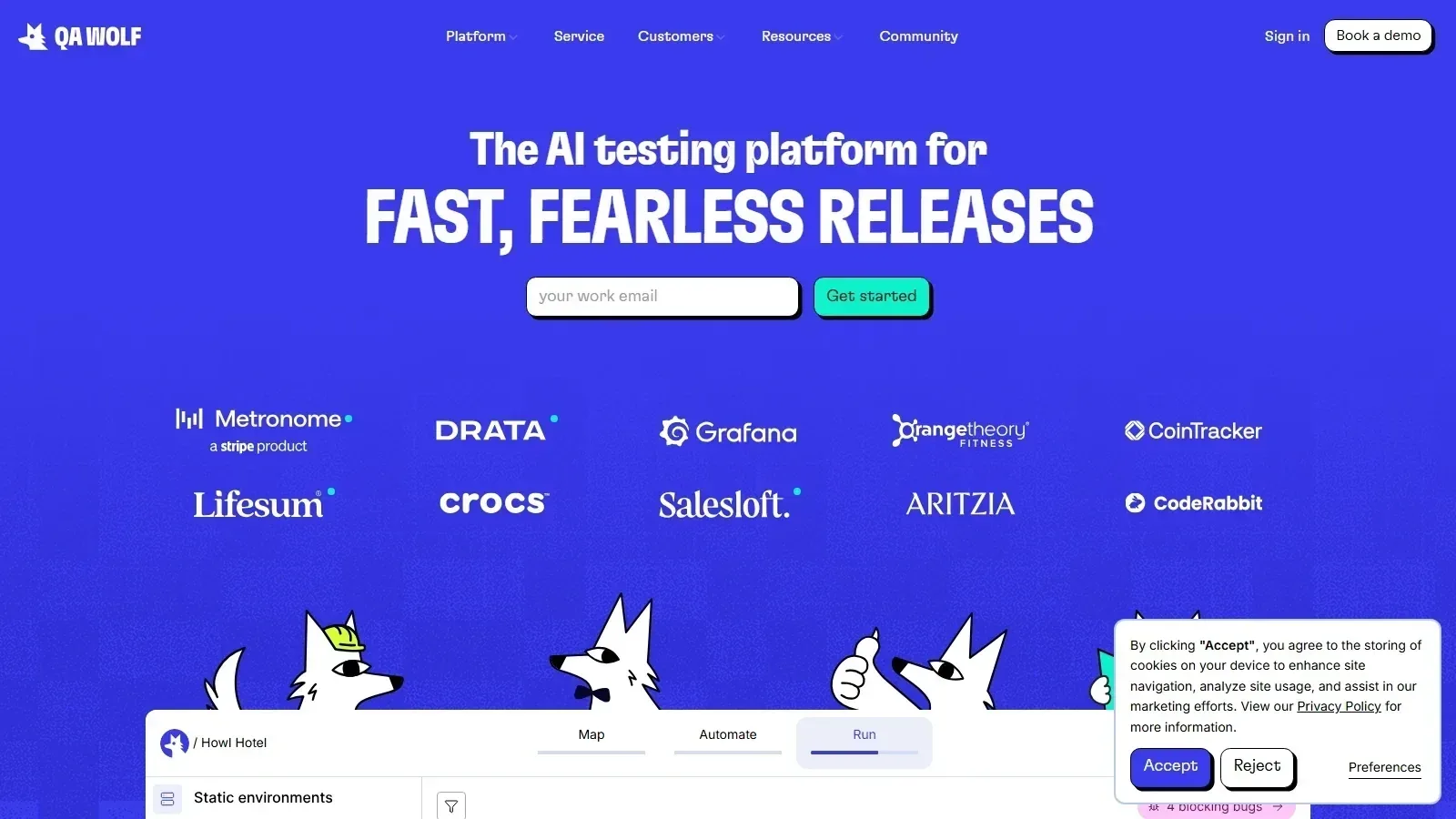 QA Wolf homepage screenshot
Alternatives
Tools to consider next

Mabl SF 8.8
Why consider it
Low-code testing for resilient web workflows

Functionize SF 8.4
Why consider it
Agentic testing for enterprise QA workflows

Testim SF 8.5
Why consider it
AI-stabilized tests for web release teams

Reflect SF 8.2
Why consider it
No-code tests for browser workflow checks
Octomind SF 7
Why consider it
Winding-down E2E testing platform for reference

KaneAI SF 8.4
Why consider it
Natural-language QA agent for test creation
FAQ