
- Connects planning and analytics in one governed environment
- Strong scenario modeling for finance and operations leaders
- Enterprise controls support audit-ready planning processes at scale

Board
Integrated planning analytics for enterprise teams
SF8.4
SF Score editorial score across features, ease, and value, based on public reviews and product research. Learn more →
Build finance planning scenario modelspredictive planningenterprise BI
Build finance planning scenario modelspredictive planning
Best for
Enterprises unifying BI and planning
Pricing
Custom
SoftFinders Score
8.4 / 10
Overview
What is Board?
Board is an enterprise planning platform that brings financial and operational planning, forecasting, reporting, analytics, and scenario modeling into the same environment. Instead of analyzing performance separately from the planning process, teams can work with governed data, change assumptions, create and compare multiple plan versions, model scenarios, and feed those decisions back into forecasts and operational plans. Board’s current AI layer includes role-specific agents for areas such as FP&A, controlling, supply chain, and merchandising, designed to analyze planning data, explain drivers, and guide users through planning decisions.
- Best fit: Enterprises coordinating planning across finance and operational functions such as supply chain, workforce, commercial teams, and retail merchandising. Board is particularly relevant when budgets, forecasts, demand and supply plans, workforce assumptions, and performance analysis need to operate from connected planning models rather than separate spreadsheets and point applications.
- Check first: Determine which capabilities belong in the initial implementation. Board Foresight is an enhancement to the Enterprise Planning Platform, rather than simply a capability every deployment automatically includes. It combines internal performance data with external economic and industry signals, identifies potentially relevant drivers, and supports predictive forecasting and scenario analysis. Board does not publish standardized subscription prices and instead provides a customized quote, so buyers should scope planning domains, integrations, modeling complexity, AI capabilities, and Foresight requirements before comparing cost.
Bottom line: Board is most relevant when an organization wants planning and analytics to operate as one continuous process—using performance data and changing assumptions to update forecasts, compare scenarios, and coordinate decisions across finance and operational teams.
KEY FEATURES
What you get out of the box
Unified Planning
Connect finance, sales, operations planning models
Scenario Modeling
Compare forecasts, budgets, and business assumptions
Predictive Analytics
Add forecasting signals to planning workflows
Workflow Approvals
Manage submissions, reviews, and planning approvals
Enterprise Dashboards
Share governed analytics with executive stakeholders
Data Integration
Connect planning data across business systems
USE CASES
Where teams put it to work
Build finance planning scenario models
Forecast demand across operating teams
Align dashboards with planning workflows
Manage workforce and headcount plans
Create executive performance review packs
Coordinate supply chain planning cycles
Editorial Take
What we like, and what to verify
- Implementation needs experienced planning and data owners
- Pricing is quote-based for enterprise planning deployments
- Too heavy for simple dashboard-only reporting teams
Screenshots
A look inside
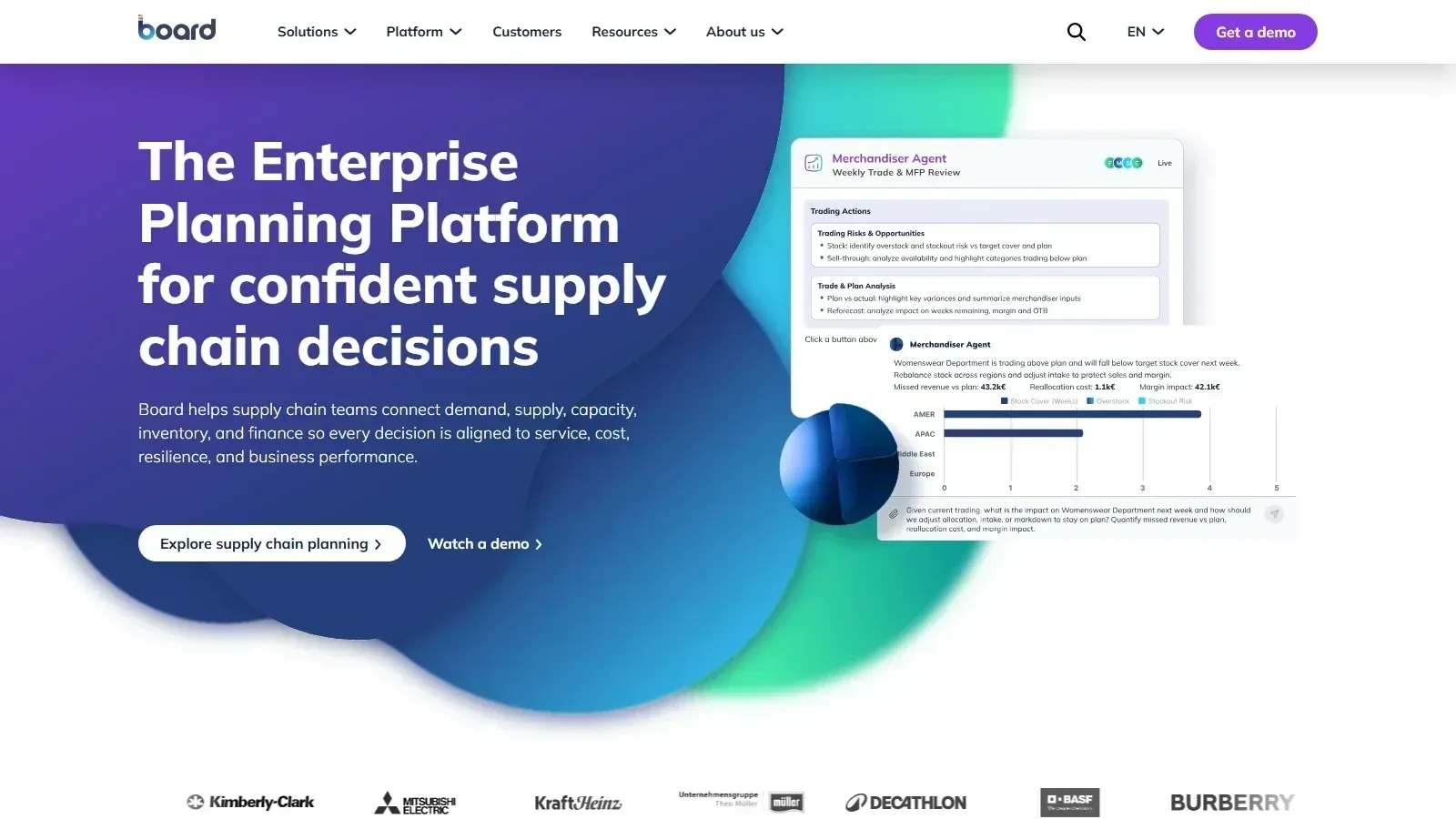 Board homepage screenshot
Alternatives
Tools to consider next

Sigma Computing SF 8.8
Why consider it
Spreadsheet analytics on live warehouse data

KNIME SF 8.8
Why consider it
Open-source workflows for analytics and AI

DataRobot SF 8.6
Why consider it
Automated enterprise AI with model governance

Altair AI Studio SF 8.3
Why consider it
Visual data science for analyst-led teams

Google Vertex AI SF 8.8
Why consider it
Managed ML and Gemini for GCP

Amazon SageMaker SF 8.8
Why consider it
Managed AI development for AWS teams
FAQ