
- Spreadsheet interface feels familiar to business analysts
- Live warehouse queries reduce extract management work
- Input tables support useful planning writeback workflows

Sigma Computing
Spreadsheet analytics on live warehouse data
SF8.8
SF Score editorial score across features, ease, and value, based on public reviews and product research. Learn more →
Analyze finance data without extractsspreadsheet BIwarehouse analytics
Analyze finance data without extractsspreadsheet BI
Best for
Spreadsheet users analyzing warehouse data
Pricing
Custom
SoftFinders Score
8.8 / 10
Overview
What is Sigma Computing?
Sigma Computing is a cloud-native analytics and AI applications platform that lets business users analyze governed cloud data through a spreadsheet-style interface while supporting dashboards, reporting, embedded analytics, data applications, and operational workflows. Sigma queries data directly in the connected data platform rather than requiring a separate analytics extract layer.
- Analytics workflow: users can explore live warehouse data with spreadsheet-style tables, pivots, charts, formulas, SQL, and dashboards. Sigma pushes queries to the underlying data platform, allowing teams to work with governed warehouse data while retaining spreadsheet-like interaction.
- AI capabilities: Sigma Assistant supports natural-language analysis and can generate charts and tables, while AI formula tools can write, correct, and explain calculations. Sigma also provides Sigma Agents for task-specific analysis and automated actions, but agents and Assistant’s dashboard/application-building modes remain public beta features as of August 2026.
- Operational fit: Input Tables let users enter or update data that is stored in the connected warehouse, while Actions can update input tables, call APIs or stored procedures, and support workflows such as forecasting, approvals, reconciliation, and operational applications. Embedded analytics extends these capabilities into customer-facing products.
- Commercial considerations: Sigma uses View, Act, Analyze, and Build license tiers, with pricing provided by quote. It also applies usage-based credits to selected billable activities, including collaborative data inputs, integration actions such as API or stored-procedure calls, and report exports.
Sigma is particularly relevant to organizations that want spreadsheet-style analysis, governed cloud data, operational applications, and emerging agentic workflows to operate within the same warehouse-connected environment.
KEY FEATURES
What you get out of the box
Spreadsheet Interface
Analyze warehouse data with familiar grid workflows
Live Queries
Query warehouse data without extracted copies
Input Tables
Capture writeback data inside governed workflows
Sigma AI
Ask questions and explain chart results
Data Models
Define governed relationships and reusable metrics
Embedded Analytics
Share customer-facing dashboards inside product applications
USE CASES
Where teams put it to work
Analyze finance data without extracts
Build revenue operations reporting views
Collect planning inputs from users
Explore warehouse data through AI
Create embedded dashboards for customers
Replace spreadsheet exports for analysts
Editorial Take
What we like, and what to verify
- Requires a modern cloud data warehouse foundation
- Visual polish trails design-heavy BI platforms today
- Governance depends on modeling and warehouse setup
Screenshots
A look inside
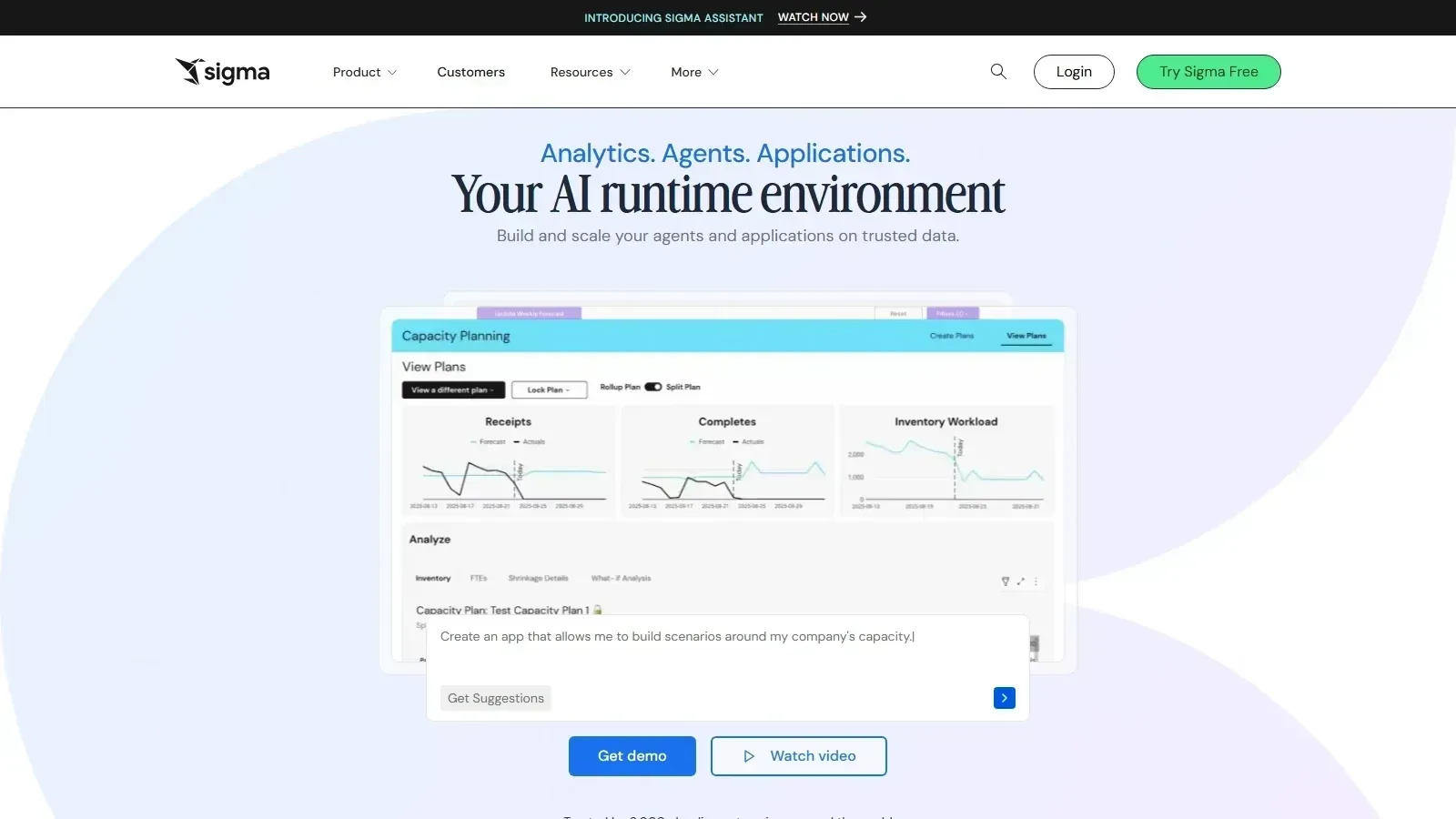 Sigma Computing homepage screenshot
Alternatives
Tools to consider next

Board SF 8.4
Why consider it
Integrated planning analytics for enterprise teams

KNIME SF 8.8
Why consider it
Open-source workflows for analytics and AI

DataRobot SF 8.6
Why consider it
Automated enterprise AI with model governance

Altair AI Studio SF 8.3
Why consider it
Visual data science for analyst-led teams

Amazon SageMaker SF 8.8
Why consider it
Managed AI development for AWS teams

Google Vertex AI SF 8.8
Why consider it
Managed ML and Gemini for GCP
FAQ