
- Combines static analysis with AI context
- Covers quality security and coverage signals
- Supports governance across many repositories well

DeepSource
Hybrid analysis for cleaner pull requests
SF8.8
SF Score editorial score across features, ease, and value, based on public reviews and product research. Learn more →
Pull Request Gatescode qualitystatic analysis
Pull Request Gatescode quality
Best for
Teams enforcing code quality gates
Pricing
From $24/mo
Free plan
Not available
SoftFinders Score
8.8 / 10
Overview
What is DeepSource?
DeepSource is a code quality and security review platform for teams that want static analysis tied closely to pull request decisions. It combines analyzers, coverage signals, secrets checks, and AI-assisted review so developers see higher-signal findings before merge. Its strength is breadth: quality, security, and reporting sit in one workflow rather than separate dashboards. That keeps review signals visible before merge across teams consistently.
It fits teams that already treat code review as a quality gate and need consistent enforcement across repositories. Buyers should watch AI credit usage, language coverage, and how findings map to existing CI policies. DeepSource is less useful as a lightweight reviewer alone; compare it with Sonar, Bito, and Greptile before standardizing. Adoption works best when teams tune rules, ownership, and reporting before standardizing.
KEY FEATURES
What you get out of the box
Hybrid Analysis
Combines static findings with AI review context
Quality Gates
Blocks risky changes against configured quality thresholds
Secrets Checks
Finds exposed secrets before reviewers approve merges
Coverage Signals
Links coverage movement with pull request decisions
Reports Dashboard
Tracks code health trends across repositories clearly
AI Credits
Uses bundled credits for AI review work
USE CASES
Where teams put it to work
Pull Request Gates
Security Review Automation
Repository Health Reporting
Coverage Change Review
CI Quality Enforcement
Engineering Governance Reviews
Editorial Take
What we like, and what to verify
- AI credits may complicate cost forecasting
- Requires tuning to reduce noisy findings
- Lightweight teams may find governance heavy
Screenshots
A look inside
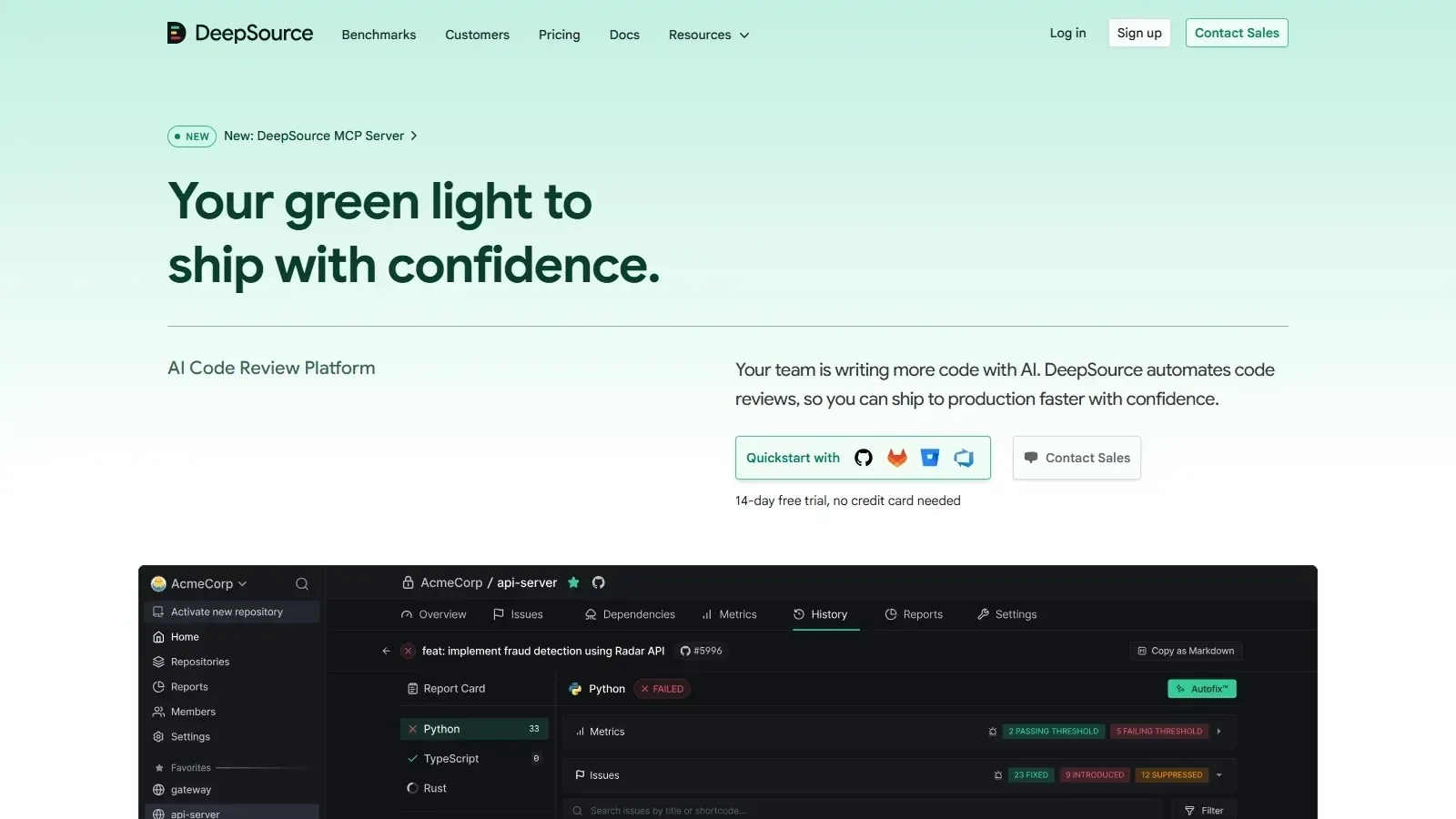 DeepSource homepage screenshot
Alternatives
Tools to consider next

Bito SF 8.5
Why consider it
Codebase-aware reviews for busy engineering teams

Greptile SF 8.7
Why consider it
Repository-aware AI review for complex pulls

Sonar SF 9
Why consider it
Static analysis for governed code quality

Trag SF 8.1
Why consider it
Pattern-based reviews for team coding rules

Korbit AI SF 8.4
Why consider it
AI pull reviews with adaptive feedback

Katalon SF 8.7
Why consider it
Unified automation for cross-platform testing teams
FAQ