
- Strong governance for enterprise code quality
- Mature static analysis across many languages
- AI fixes connect directly to findings

Sonar
Static analysis for governed code quality
SF9
SF Score editorial score across features, ease, and value, based on public reviews and product research. Learn more →
Quality Gate Enforcementsecurity reviewcode quality
Quality Gate Enforcementsecurity review
Best for
Enterprises standardizing code quality governance
Pricing
Free tier available
Free plan
Available
SoftFinders Score
9 / 10
Overview
What is Sonar?
Sonar is a code quality and security analysis platform for teams that need consistent standards across human-written and AI-generated code. It scans repositories, flags maintainability issues, vulnerabilities, code smells, and quality gate failures before changes reach production. Its strength is governance: engineering leaders can standardize rules and track code health across projects. That keeps quality rules visible across repositories before production releases during reviews.
It fits enterprises, regulated teams, and organizations that need repeatable quality controls rather than ad hoc reviewer judgment. Buyers should evaluate deployment choice, rule configuration, and developer adoption. Sonar is AI-enabled, not purely an AI reviewer; compare it with DeepSource and Trag when pull request context matters. Adoption works best when teams tune rules, quality gates, governance reporting, and developer expectations before scaling widely.
KEY FEATURES
What you get out of the box
Static Analysis
Scans code for bugs and vulnerabilities early
Quality Gates
Enforces maintainability thresholds before merges proceed safely
AI CodeFix
Suggests fixes for detected code issues reliably
Security Rules
Flags risky patterns across supported languages quickly
Governance Reports
Tracks quality posture across engineering portfolios directly
Cloud Deployment
Runs managed analysis without infrastructure ownership consistently
USE CASES
Where teams put it to work
Quality Gate Enforcement
AI Code Assurance
Enterprise Code Governance
Static Security Review
Developer Remediation Workflow
Compliance Review Preparation
Editorial Take
What we like, and what to verify
- Setup requires rule governance and adoption
- Not primarily an autonomous AI reviewer
- Enterprise rollout can feel process heavy
Screenshots
A look inside
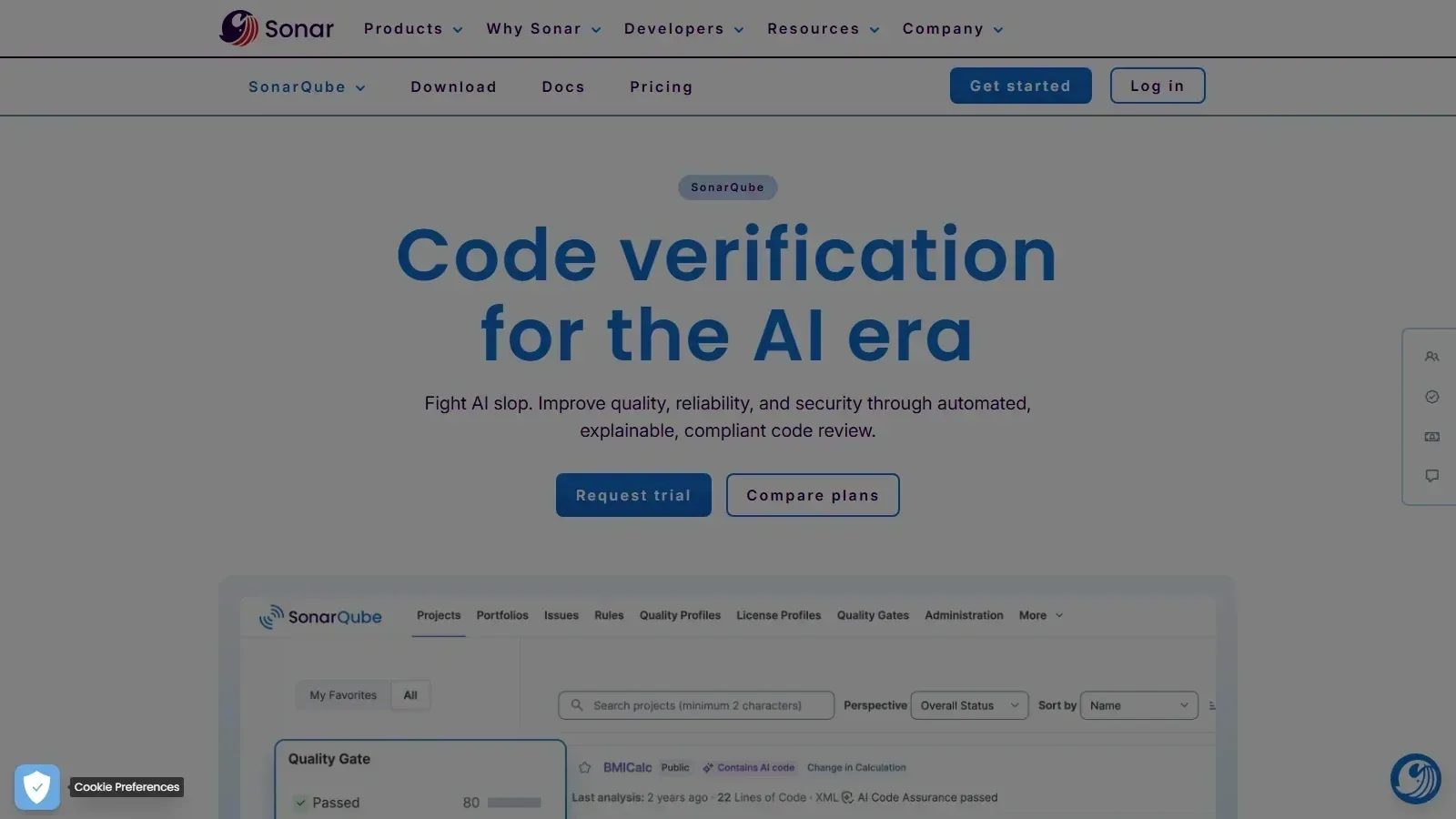 Sonar homepage screenshot
Alternatives
Tools to consider next

DeepSource SF 8.8
Why consider it
Hybrid analysis for cleaner pull requests

Bito SF 8.5
Why consider it
Codebase-aware reviews for busy engineering teams

Greptile SF 8.7
Why consider it
Repository-aware AI review for complex pulls

Trag SF 8.1
Why consider it
Pattern-based reviews for team coding rules

Korbit AI SF 8.4
Why consider it
AI pull reviews with adaptive feedback

Keploy SF 8.3
Why consider it
Traffic-based API tests for backend teams
FAQ