
- Summarizes reviews before human handoff begins
- Suggests fixes inside normal PR workflows
- Understands codebase context beyond raw diffs

Bito
Codebase-aware reviews for busy engineering teams
SF8.5
SF Score editorial score across features, ease, and value, based on public reviews and product research. Learn more →
Fast PR Summariesdeveloper productivitypull request review
Fast PR Summariesdeveloper productivity
Best for
Teams reviewing frequent pull requests
Pricing
From $15/mo
Free plan
Not available
SoftFinders Score
8.5 / 10
Overview
What is Bito?
Bito is an AI code review assistant for engineering teams that need faster feedback on pull requests without adding another manual review queue. It reads repository context, summarizes changes, and suggests line-level fixes inside code review workflows. Its main strength is practical review assistance: reviewers get context and targeted comments before they spend attention. That gives reviewers earlier context without creating extra review queues.
It fits teams with frequent pull requests, shared coding standards, and reviewers who need clearer handoffs. Buyers should compare per-developer pricing, review quotas, and how the tool handles noisy suggestions. Bito is not a replacement for architectural review; compare it with Greptile, Korbit AI, and DeepSource for repository-aware coverage. Adoption works best when teams tune prompts, permissions, ownership, and reviewer expectations before scaling repositories.
KEY FEATURES
What you get out of the box
Bito Reviews
Summarizes pull requests with codebase-aware feedback clearly
Inline Fixes
Suggests focused fixes inside review conversations early
Design Context
Maps architecture details into review comments safely
Review Quotas
Shows usage limits for planning review volume
Jira Links
Connects review findings with delivery workflows reliably
IDE Feedback
Reviews code before pull requests open quickly
USE CASES
Where teams put it to work
Fast PR Summaries
Inline Fix Suggestions
Architecture Impact Checks
Reviewer Handoff Support
Pre Review Feedback
Codebase Question Answering
Editorial Take
What we like, and what to verify
- Usage quotas need active cost monitoring
- Suggestions still require senior reviewer judgment
- Broad architecture review remains human responsibility
Screenshots
A look inside
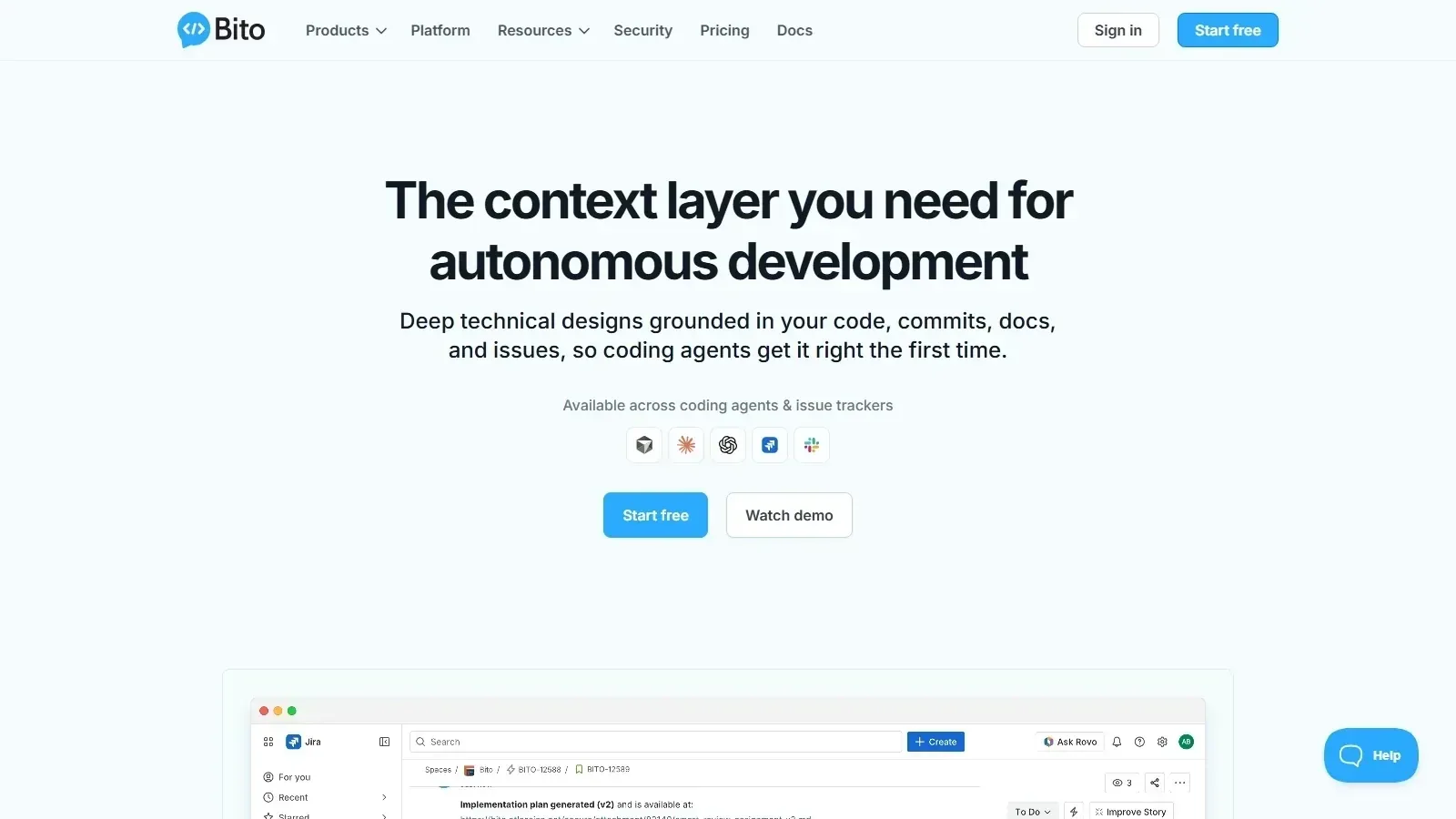 Bito homepage screenshot
Alternatives
Tools to consider next

DeepSource SF 8.8
Why consider it
Hybrid analysis for cleaner pull requests

Greptile SF 8.7
Why consider it
Repository-aware AI review for complex pulls

Sonar SF 9
Why consider it
Static analysis for governed code quality

Trag SF 8.1
Why consider it
Pattern-based reviews for team coding rules

Korbit AI SF 8.4
Why consider it
AI pull reviews with adaptive feedback

Sentry SF 9.1
Why consider it
Error monitoring for faster debugging decisions
FAQ