
- Forward demand signals support proactive decisions carefully.
- Useful for revenue and marketing collaboration carefully.
- RateGain ecosystem adds broader travel data context

RateGain Demand.AI
Forward demand intelligence for hotels
SF8.3
SF Score editorial score across features, ease, and value, based on public reviews and product research. Learn more →
Forecast hotel demand before booking peakshotel forecastingdemand intelligence
Forecast hotel demand before booking peakshotel forecasting
Best for
Hotel groups needing forward demand signals
Pricing
Custom
SoftFinders Score
8.3 / 10
Overview
What is RateGain Demand.AI?
RateGain Demand.AI is part of RateGain’s Data-as-a-Service portfolio and was originally developed to turn forward-looking travel signals into demand intelligence. However, RateGain’s 2026 product positioning now distinguishes Demand AI, which it describes in connection with smarter audience targeting, from Navigator AI, its current hotel-facing product for demand forecasting, competitive intelligence, and revenue-management decision support.
- Forward-looking demand data: Demand.AI historically combined signals such as travel searches, flight activity, hotel availability and pricing, booking-engine information, and other travel indicators to estimate future demand rather than relying only on historical hotel bookings. RateGain continues to position demand intelligence and travel-intent data as part of its DaaS business.
- Current hotel demand intelligence: RateGain now surfaces hotel-focused demand forecasting primarily through Navigator within UNO Insights. Navigator identifies high-demand dates for the next 75 days, highlights important focus dates, combines demand with competitive-rate intelligence, and uses signals from hotels, events, flights, and broader markets to support commercial decisions.
- Source-market analysis: Navigator currently identifies the top five source markets for inbound and outbound travelers and provides city-level demand reporting alongside competitive pricing and parity information. These signals can help revenue and commercial teams decide which dates and geographic markets deserve closer pricing, distribution, or marketing attention.
- Role in revenue management: RateGain positions this intelligence as decision support rather than a replacement for a hotel’s RMS. Navigator can be used through its interface or feed information into RMS and BI systems, while RateGain’s separate Rev AI and distribution products handle other parts of pricing and rate execution.
For buyers, the important distinction is that RateGain still references Demand-AI within its DaaS portfolio, but the hotel demand-forecasting features commonly associated with the older Demand.AI product—including the 75-day outlook and source-market analysis—are now principally presented through Navigator AI and UNO Insights.
KEY FEATURES
What you get out of the box
Demand Forecasting
Shows forward travel demand by market
Real Time
Uses current indicators alongside historical context
City Coverage
Tracks demand across selected destination markets
Data API
Supports external systems with demand signals
Revenue Planning
Helps teams plan pricing and campaigns
Market Alerts
Highlights demand changes requiring attention carefully.
USE CASES
Where teams put it to work
Forecast hotel demand before booking peaks
Support revenue planning with travel signals
Guide marketing around destination demand
Compare markets across hotel portfolios
Feed demand data into analytics systems
Improve decisions during volatile travel periods
Editorial Take
What we like, and what to verify
- Small hotels may not need external demand data
- Coverage and API scope need confirmation carefully.
- Pricing is sales-led and enterprise leaning carefully.
Screenshots
A look inside
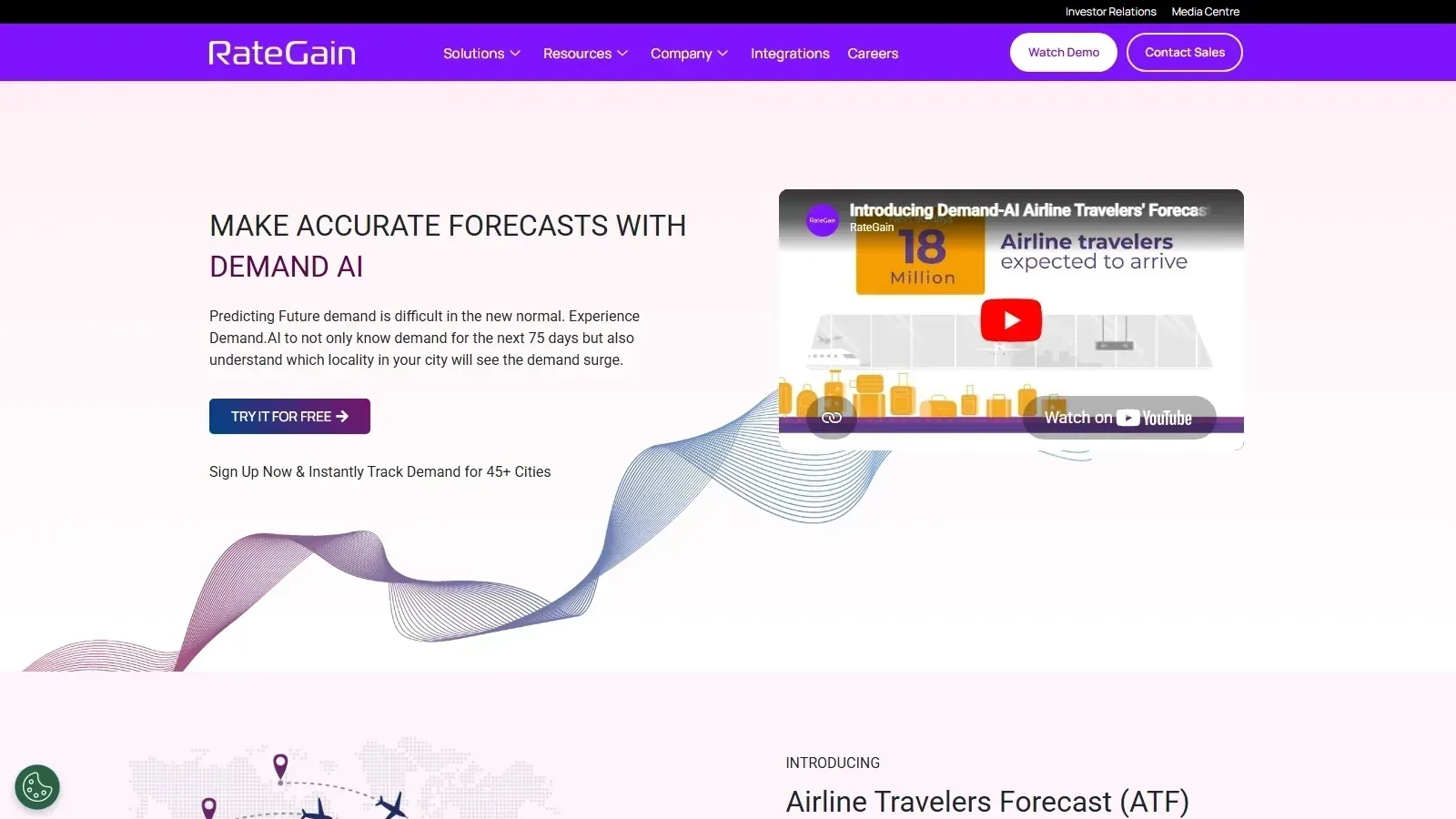 RateGain Demand.AI homepage screenshot
Alternatives
Tools to consider next

ProfitSword SF 8.4
Why consider it
Hotel financial BI for portfolios
Lighthouse SF 8.7
Why consider it
Hotel market intelligence and revenue insights

BEONx SF 8.4
Why consider it
AI revenue management for Spanish hotels

Atomize SF 8.5
Why consider it
AI pricing for mid-market hotels

happyhotel SF 8.3
Why consider it
Accessible pricing automation for DACH hotels

FLYR Hospitality SF 8.4
Why consider it
AI revenue strategy for hotel portfolios
FAQ