
- Developer-focused triage connects errors to code
- Stack traces speed production debugging decisions
- Free tier supports early team adoption

Sentry
Error monitoring for faster debugging decisions
SF9.1
SF Score editorial score across features, ease, and value, based on public reviews and product research. Learn more →
Production Error Triageerror monitoringdebugging
Production Error Triageerror monitoring
Best for
Developers triaging production error signals
Pricing
Free tier available
Free plan
Available
SoftFinders Score
9.1 / 10
Overview
What is Sentry?
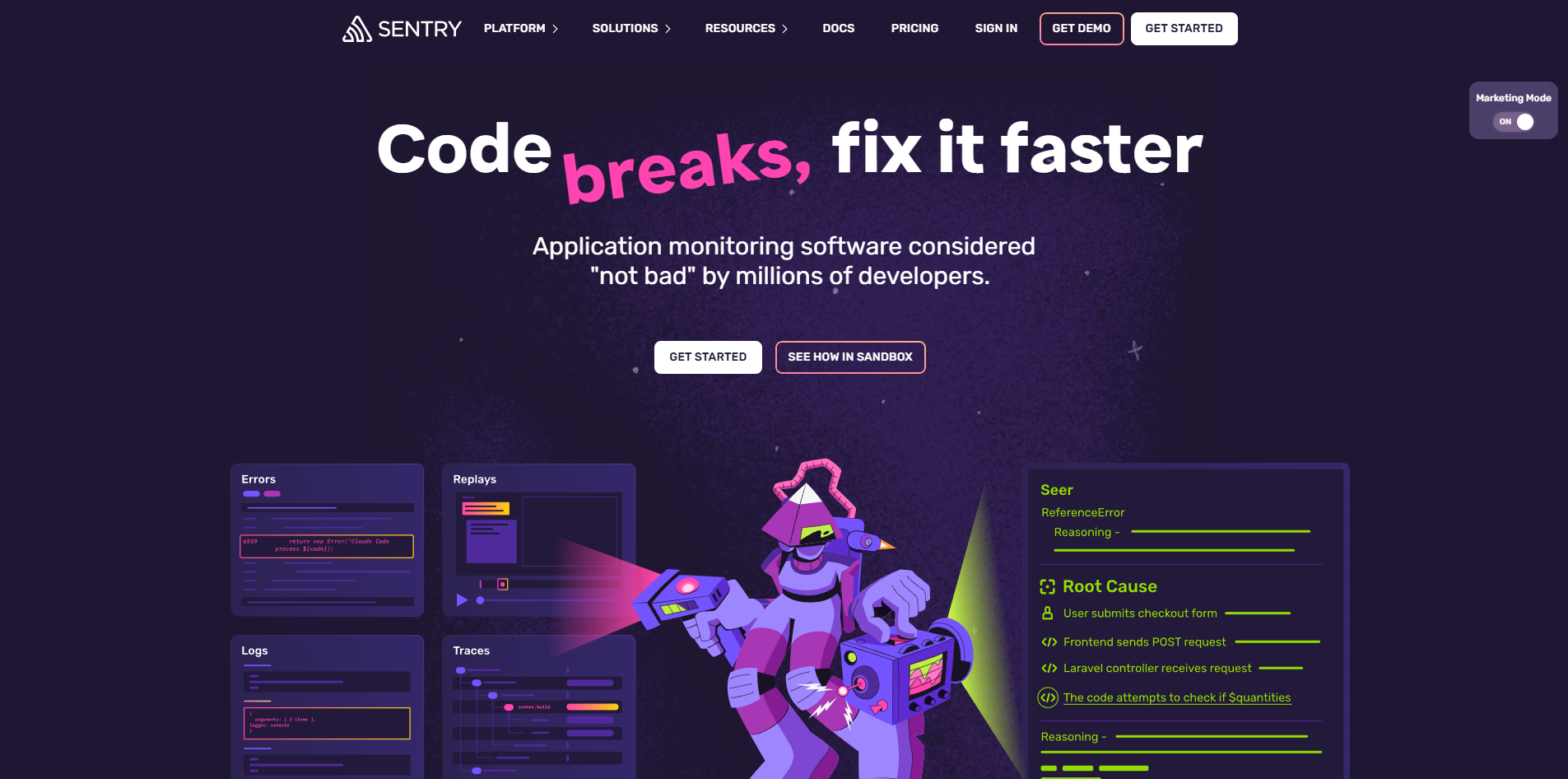
Sentry is an application monitoring and debugging platform for developers who need to see errors, stack traces, performance issues, and release health in production. It groups issues, surfaces context, and uses AI-enabled workflows to speed triage. Its strength is developer focus: incidents connect directly to code, releases, and debugging decisions. That keeps diagnosis connected to real production behavior during incidents and releases for teams.
It fits software teams that want faster production debugging without separating observability from engineering workflows. Buyers should evaluate event volume, retention, project structure, and alerting maturity. Sentry is not an autonomous coding agent; compare it with Datadog, New Relic, and Honeycomb for broader telemetry needs. Adoption works best when teams tune alerts, ownership rules, release tagging, and triage routines before relying on automation daily.
KEY FEATURES
What you get out of the box
Error Grouping
Groups related exceptions into actionable debugging issues
Stack Traces
Shows code context for debugging failures practically
Release Health
Tracks errors across deployments and versions clearly
Performance Monitoring
Connects slow transactions with real user impact
Issue Triage
Routes ownership and priority during incidents safely
AI Insights
Summarizes issues for faster debugging decisions reliably
USE CASES
Where teams put it to work
Production Error Triage
Release Health Review
Stack Trace Debugging
Performance Regression Review
Ownership Routing Flow
AI Issue Summaries
Editorial Take
What we like, and what to verify
- Broader infrastructure observability needs other tools
- Event volume can affect monthly costs
- Alert tuning requires ongoing ownership discipline
Screenshots
A look inside
Alternatives
Tools to consider next
Datadog SF 9.2
Why consider it
Broad observability for complex production systems

New Relic SF 8.8
Why consider it
AI-assisted observability for full-stack investigations teams

Honeycomb SF 8.9
Why consider it
High-cardinality observability for production debugging teams

Sonar SF 9
Why consider it
Static analysis for governed code quality

DeepSource SF 8.8
Why consider it
Hybrid analysis for cleaner pull requests
Octomind SF 7
Why consider it
Winding-down E2E testing platform for reference
FAQ