
- Strong platform breadth across data and AI
- MLflow and Mosaic AI support production workflows
- Unity Catalog improves governance across technical teams

Databricks
Lakehouse analytics for data science teams
SF8.8
SF Score editorial score across features, ease, and value, based on public reviews and product research. Learn more →
Train production machine learning modelsmachine learninglakehouse
Train production machine learning modelsmachine learning
Best for
Data teams building governed AI platforms
Pricing
Paid
Free plan
Not available
SoftFinders Score
8.8 / 10
Overview
What is Databricks?
Databricks is a unified data, analytics, and AI platform built on lakehouse architecture. It supports data engineering, data warehousing, business intelligence, machine learning, and AI development on a shared governed foundation.
- Data engineering: Lakeflow Connect ingests data from databases, enterprise applications, cloud storage, and streaming sources; Lakeflow pipelines handles batch and streaming transformations; and Lakeflow Jobs orchestrates multi-task workflows. Databricks SQL provides data warehousing and analytics directly on lakehouse data.
- AI and analytics: teams can train and serve machine learning models, build and deploy AI applications and agents, create AI/BI dashboards, and use Genie One and Genie Agents for natural-language analysis grounded in governed organizational data.
- Governance and architecture: Unity Catalog centralizes access control, discovery, lineage, and auditing across data and AI assets, including tables, volumes, models, and functions.
- Implementation checks: buyers should assess cloud architecture, source and connector coverage, migration requirements, Unity Catalog design, compute choices, and cost controls such as budgets and compute policies before moving production workloads.
Databricks fits organizations that want data engineering, SQL/BI, and AI teams working against the same lakehouse data rather than maintaining separate analytical copies across multiple systems.
KEY FEATURES
What you get out of the box
Lakehouse Platform
Unify engineering, analytics, and machine learning
Mosaic AI
Build and govern AI applications clearly
MLflow Tracking
Manage experiments, models, and deployments clearly
Unity Catalog
Govern data, models, and lineage clearly
Databricks SQL
Run warehouse analytics on lakehouse data
Streaming Pipelines
Process real-time data with managed workflows
USE CASES
Where teams put it to work
Train production machine learning models
Build governed lakehouse analytics platforms
Deploy GenAI applications with controls
Run large scale data engineering
Analyze warehouse data with SQL
Share trusted data across teams
Editorial Take
What we like, and what to verify
- Cloud costs require active monitoring and controls
- Learning curve is steep for non-engineering users
- Smaller teams may not need full platform
Screenshots
A look inside
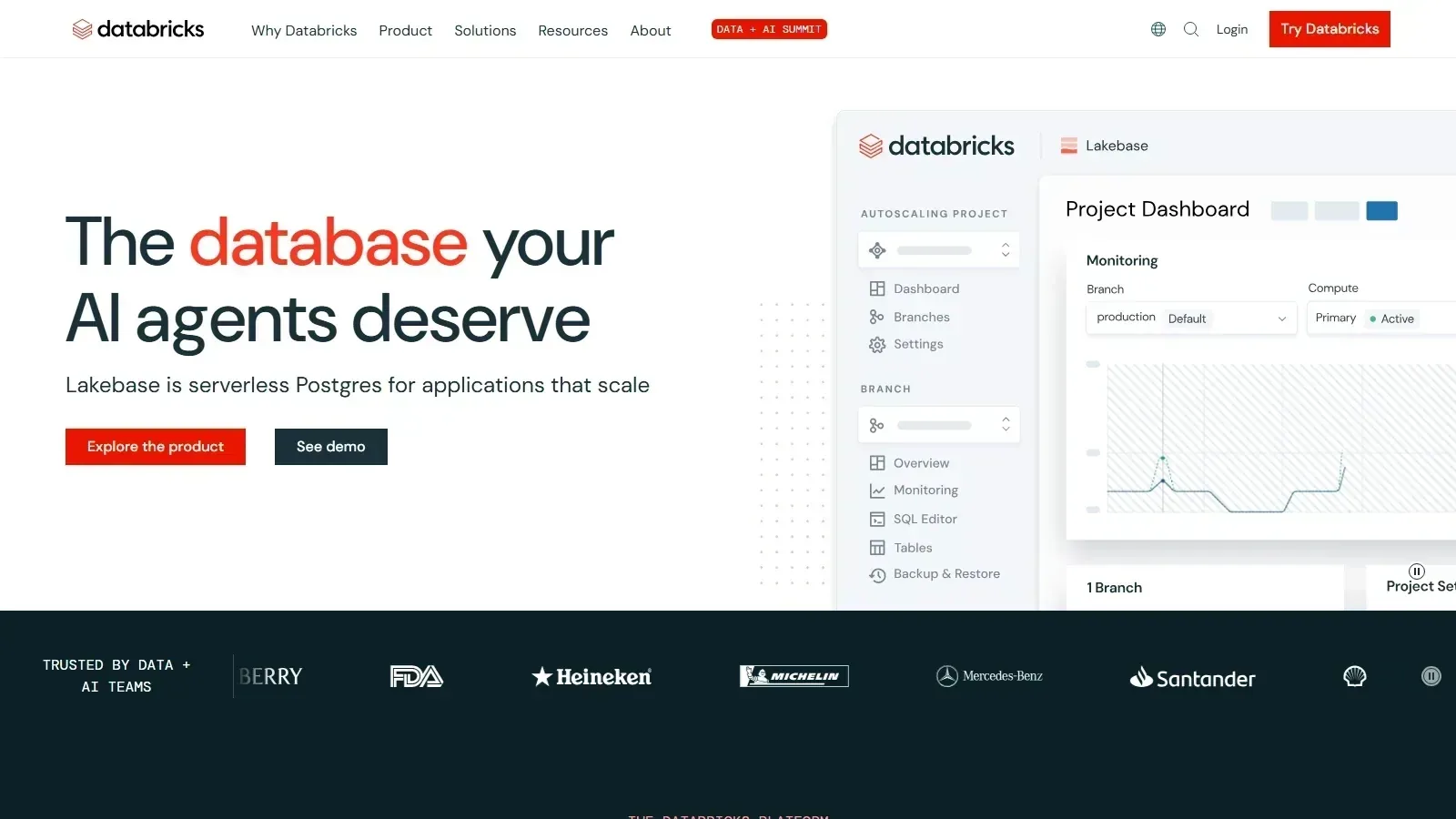 Databricks homepage screenshot
Alternatives
Tools to consider next

Snowflake SF 8.8
Why consider it
Cloud data platform with AI functions

Alteryx SF 8.5
Why consider it
Analytics automation for repeatable data workflows

Microsoft Power BI SF 9
Why consider it
Microsoft BI with Copilot analytics

Looker SF 8.4
Why consider it
Governed BI with LookML modeling
Tableau SF 8.7
Why consider it
Visual analytics for governed dashboard teams
FAQ