


Tableau
Visual analytics for governed dashboard teams
SF Score
SF Score editorial score across features, ease, and value. Learn more →
CATEGORY GUIDE
Compare AI tools for AI BI & Insights, AI Analytics Platform, AI Data Science Platform, Data Engineering & Analytics Infrastructure, AI Data & Query Analytics, and AI Market & Competitive Intelligence.
EDITOR'S PICKS
Hand-picked for category fit, not popularity
Visual analytics for governed dashboard teams
SF Score editorial score across features, ease, and value. Learn more →

Managed ML and Gemini for GCP
SF Score editorial score across features, ease, and value. Learn more →

Event analytics for websites and apps
SF Score editorial score across features, ease, and value. Learn more →

Affordable BI for small business teams
SF Score editorial score across features, ease, and value. Learn more →
Showing 1-20 of 70 tools, plus the 4 editor’s picks above

Microsoft BI with Copilot analytics

Heatmaps and recordings for UX insight

Open-source workflows for analytics and AI

Open-source analytics for technical teams

Spreadsheet analytics on live warehouse data

Cloud data platform with AI functions

Search analytics for business users

Lakehouse analytics for data science teams

Managed AI development for AWS teams

CRM reporting inside HubSpot workspaces
AI-powered enterprise data management platform

Product analytics for funnels and retention

AI analytics workflows for media agencies

Managed ML for Azure enterprise teams

Enterprise product analytics for digital teams

Collaborative AI platform across business roles

Affordable CRO analytics with AI assistant

Behavior analytics for website UX fixes

Product analytics with in-app guidance

Associative analytics for connected data
Buyer’s guide
AI analytics software tools can analyze large amounts of data, find trends, generate insights, detect anomalies, build visualizations, and predict future outcomes faster. The ideal choice would vary by company size, analytical needs, data volume, current data infrastructure, user skill level, and the type of decisions that teams will be making. It also depends on how much analytical work an organization wants AI to automate.

Quick answer
AI technology is used to analyze business data, look for patterns, generate insights, automate reporting, find anomalies, or make predictions and decisions.
Best for
Business intelligence teams, analysts, data scientists, product teams, marketing teams, operations teams, or organizations that want to make data easier to explore.
Watch out for
Poor data quality, inaccurate AI-generated answers, inconsistent metric definitions, weak access controls, difficult integrations, unexpected compute costs, and a lack of transparency in the generation of answers.
Top-rated pick
Today, advanced AI analytics software can answer questions about business data, create charts and dashboards, identify unusual patterns, explain performance changes, and help with prediction.
AI analytics tools can also provide greater business access to the data, enabling businesses to ask questions in natural language rather than strictly through SQL, manually generated reports, or dedicated analysts
When you have business data for your products, use actual sales data, customer information, marketing results, product events, operational data, or warehouse data for product testing.
Effective analytics software should reduce the time to reach useful insights while still letting users understand where the underlying data and calculations came from.
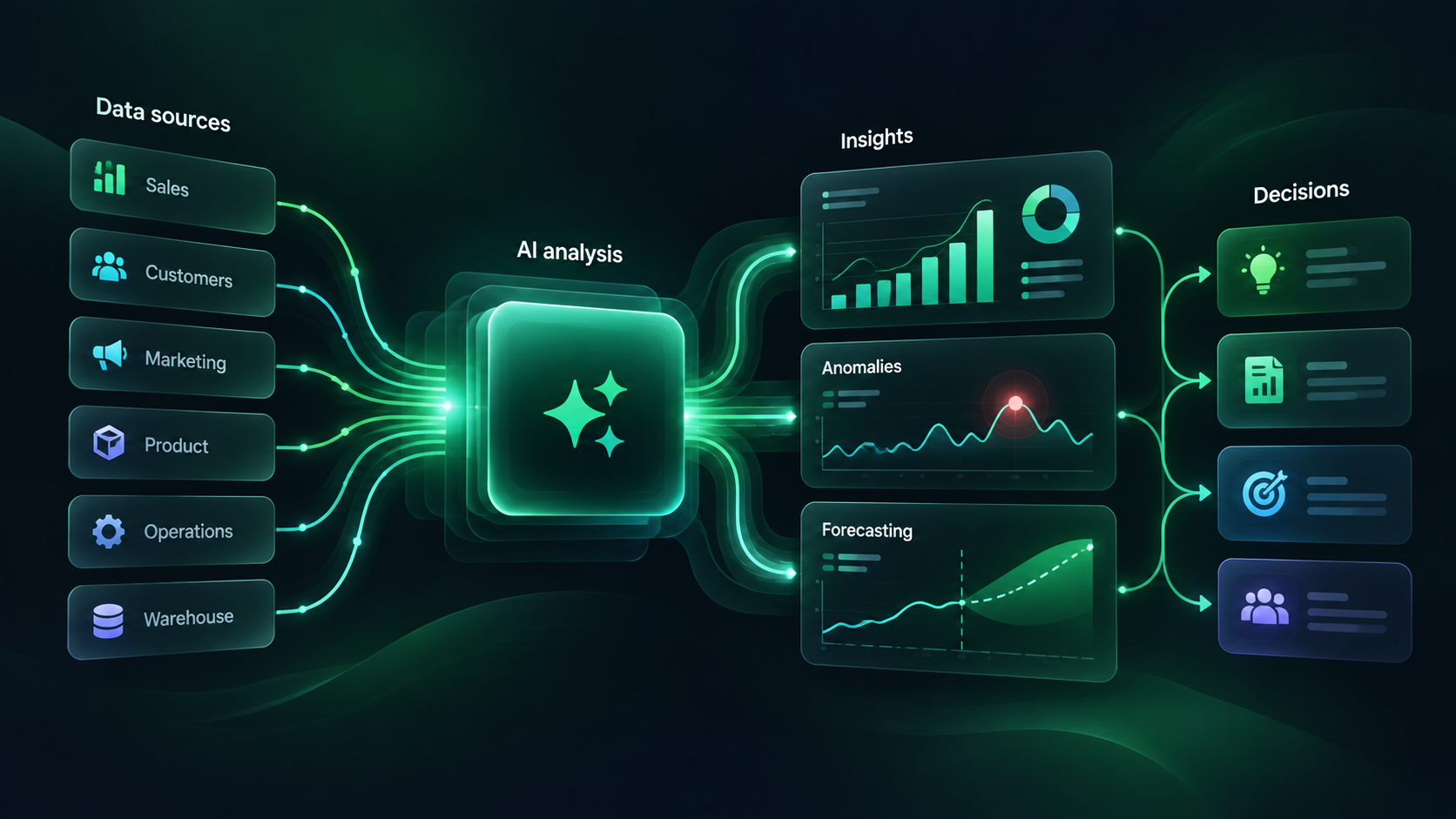
AI analytics tools are those that leverage machine learning, natural language processing, predictive models, or generative AI to analyze and interpret data.
This includes AI business intelligence software, dashboard and visualization platforms, AI data science software, predictive analytics, product analytics, customer analytics, experience analytics, and AI-assisted data querying.
Not all analytics tools are necessarily your Data Warehouse! The business world is surrounded by products that connect to existing databases, applications or cloud warehouses, and give another layer to analyze, visualize, or interpret the data.
Minimize data analysis time and prepare routine reports.
Enable business users to investigate information without always having to rely on analysts to get the answers to all their questions.
Recognize trends, unusual performance changes, opportunities, and operational issues more quickly.
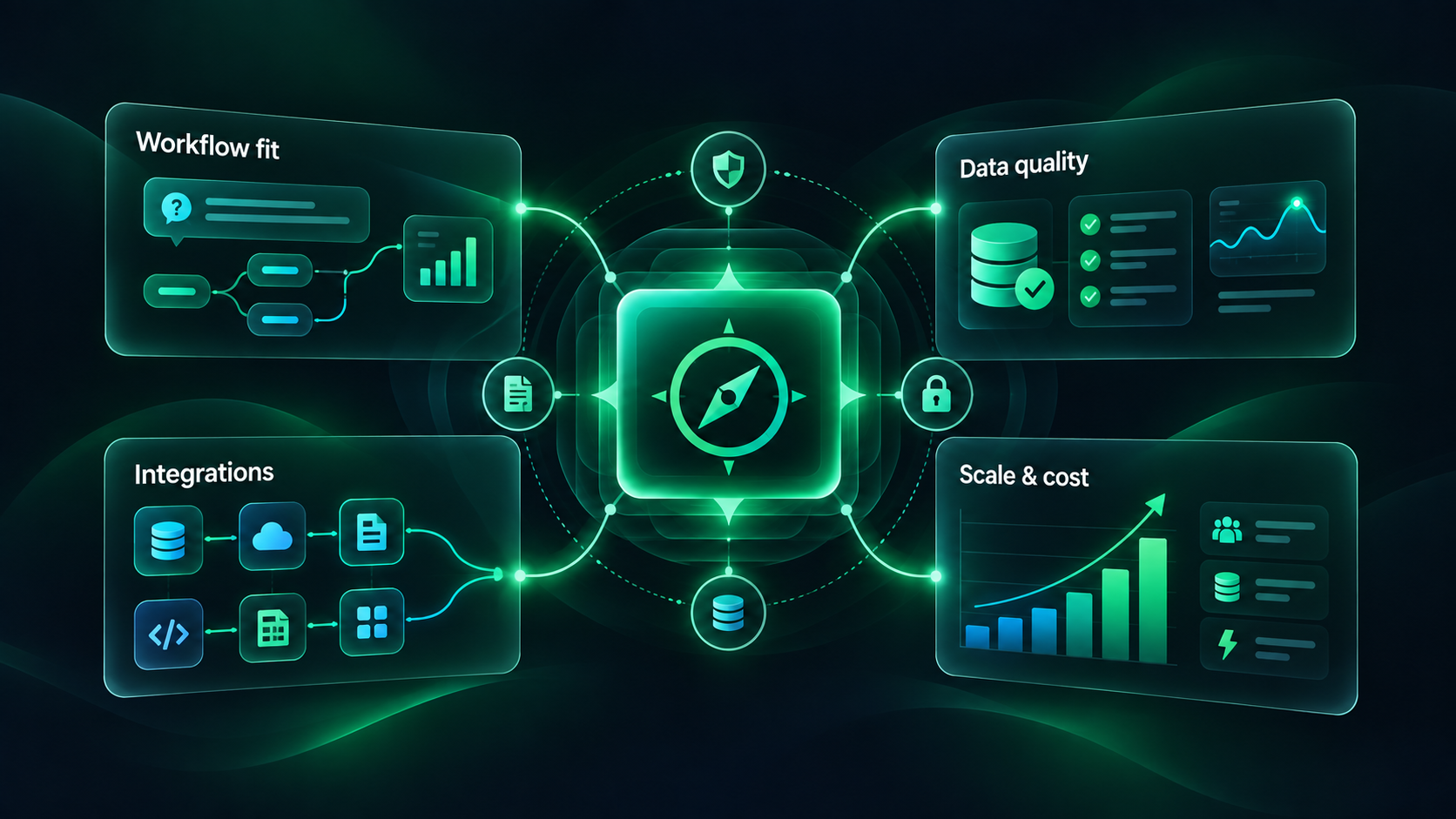
The factors that actually separate one tool from another — expand any for detail.
The bottom line
The ideal AI analytics software will enable users to gain insight from reliable data in a short time period and reduce repetitive analytical tasks. With features such as the ability to validate critical data points, data sources, and drawn conclusions, AI-driven analytics can be highly beneficial.
Free expert help
Still weighing your options?
Tell us what you’re trying to do and we’ll point you to the right tools — from a real advisor, not a bot.
Get a free, tailored shortlist for your team, stack and budget.
Get adviceOne reply within a business day · never shared
Editorial guidance drawn from public reviews, product data and category fit — a starting point, not a substitute for your own evaluation. How we score →